Places to Visit in Jaipur: Top 10 Spots, Ticket Prices and Timings
Places to Visit in Jaipur: Top 10 Spots, Ticket Prices and Timings
Quick answer: The top places to visit in Jaipur are Amber Fort, Hawa Mahal, City Palace, Jantar Mantar, Nahargarh Fort, Jaigarh Fort, Jal Mahal, Albert Hall Museum, Patrika Gate and Birla Mandir. Plan 2 to 3 days to see them well. The best time to visit Jaipur is October to March, when days are mild and dry.
2026 update: Rajasthan raised entry fees at its main Jaipur monuments from January 1, 2026. Amber Fort now costs ₹200 for Indian visitors (up from ₹100) and ₹1,000 (about $10) for foreign visitors. Hawa Mahal, Jantar Mantar, Nahargarh Fort and Albert Hall now cost ₹100 for Indians and ₹600 (about $6) for foreigners. All new prices are in the table below.
Jaipur Tourist Places (Tickets and Timings)
Here are the main tourist places in Jaipur with their 2026 entry fees, opening hours and how long each one takes.
| Place | Indian visitor | Foreign visitor | Timings | Time needed |
| Amber Fort (Amer Fort) | ₹200 | ₹1,000 (about $10) | 8:00 AM to 5:30 PM | 2 to 3 hours |
| Hawa Mahal | ₹100 | ₹600 (about $6) | Opens 9:00 AM | 45 minutes |
| City Palace | ₹400 | Rates listed separately | 9:30 AM to 6:30 PM | 2 hours |
| Jantar Mantar | ₹100 | ₹600 (about $6) | Daytime | 1 hour |
| Nahargarh Fort | ₹100 | ₹600 (about $6) | Daytime, popular at sunset | 1.5 hours |
| Albert Hall Museum | ₹100 | ₹600 (about $6) | Daytime | 1.5 to 2 hours |
| Jal Mahal | Free (view only) | Free | Any time | 20 minutes |
| Patrika Gate | Free | Free | Daytime | 30 minutes |
| Birla Mandir | Free | Free | Morning and evening | 30 minutes |
Composite ticket: ₹550 for Indians and ₹1,700 (about $18) for foreigners. It covers Amber Fort, Hawa Mahal, Jantar Mantar, Nahargarh Fort, Albert Hall, Sisodia Rani Garden, Vidyadhar Garden and Isarlat. It does not cover City Palace or Jaigarh Fort. Students get lower rates with a valid ID. Ask about the validity period when you buy.
Good news for OCI card holders: Overseas Citizens of India pay the same entry fee as Indian citizens at monuments, museums and national parks. Carry your OCI card to the ticket counter.
Dollar amounts are rounded and based on about ₹97 to $1 (October 2026). You pay in rupees at the counter, so the dollar cost can move a little with the exchange rate. Timings can change on festival days. Check before you go.
Top 10 Places to Visit in Jaipur
These are the 10 places to visit in Jaipur that every first-time visitor should see. They are listed in a rough order that also works as a route.
1. Amber Fort (Amer Fort)
Amber Fort is the number one place on most lists of things to do in Jaipur, and for good reason. Locals call it Amer Kila or Amer Mahal. This hilltop palace sits about 11 km north of the city and looks over Maota Lake. It is part of the “Hill Forts of Rajasthan” group on the UNESCO World Heritage list.
What to see:
- Sheesh Mahal (Mirror Palace): walls and ceilings covered in thousands of small mirrors. Even a little light makes the room glow.
- Diwan-e-Aam: the hall where the king met the public.
- Ganesh Pol: a painted gateway that leads into the private palace.
- Sukh Niwas: a room once cooled by water flowing through channels in the walls.
Ticket: ₹200 (Indian), ₹1,000 or about $10 (foreign)
Timings: 8:00 AM to 5:30 PM, last entry around 5:00 PM. An evening light and sound show also runs; check the day’s show time.
Tip: Reach by 8:00 or 9:00 AM. The Sheesh Mahal gets crowded by late morning. You can walk up the slope or take a jeep from the base. Elephant rides still run in the early hours, but animal welfare groups have raised concerns about them, so many families now skip them.
Read more: Golden Triangle tour India 7 day guide
2. Hawa Mahal (Palace of Winds)
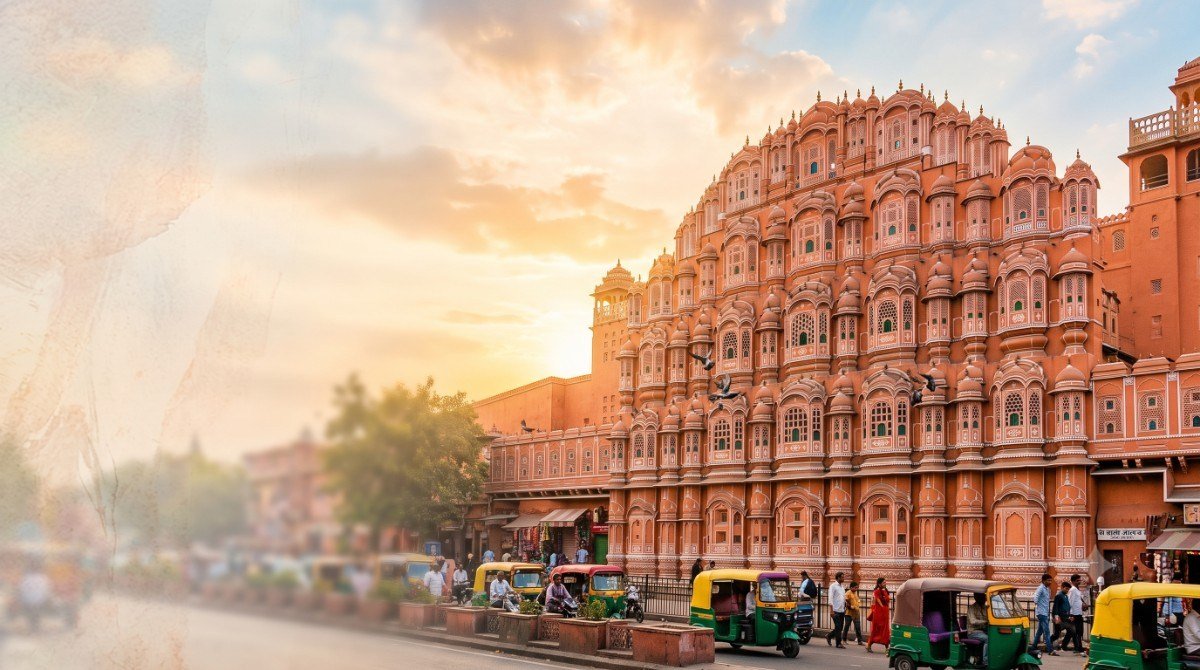
Hawa Mahal is the picture most people have in mind when they think of Jaipur. It is often called the pink palace of Jaipur, and some people spell it “Havamal”. It was built in 1799 by Maharaja Sawai Pratap Singh and designed by Lal Chand Ustad.
The five-storey front has 953 small windows, called jharokhas. Royal women could watch street festivals through them without being seen. The windows also let cool air flow through the building, which is how it got the name “Palace of Winds”.
Ticket: ₹100 (Indian), ₹600 or about $6 (foreign). The outside view from the street is free.
Timings: Opens 9:00 AM. Try to enter by 3:30 PM.
Tip: The front faces east, so early morning gives the best light for photos. The rooftop cafes across the road give the classic full view. Ask about a minimum order before you go up.
3. City Palace Jaipur
City Palace sits right in the middle of the old city. Parts of it are still home to the Jaipur royal family, and the rest is a museum. The palace mixes Rajput and Mughal styles.
What to see:
- Mubarak Mahal: a guest palace that holds the museum’s textile collection.
- Pritam Niwas Chowk: a courtyard with four painted gates, one for each season. The Peacock Gate is the most photographed.
- Two giant silver urns in the Diwan-e-Khas, each listed by Guinness World Records as the largest sterling silver vessels in the world.
- Chandra Mahal: the royal residence. Only a paid guided tour goes inside.
Ticket: ₹400 per adult for Indian visitors as per the official City Palace website. A ₹500 composite ticket adds Jaigarh Fort and the Royal Cenotaphs (Gaitore). The Chandra Mahal Royal Tour costs ₹4,000. Foreign visitor rates are shown separately on the site.
Timings: 9:30 AM to 6:30 PM, last tickets around 6:00 PM. Closed on Dhulandi (the day after Holika Dahan).
2026 note: The textile gallery in Mubarak Mahal has been closed for repair since March 27, 2026, and the “Museum at Night” show is on hold for now.
4. Jantar Mantar
Right next to City Palace is Jantar Mantar, a set of about 20 large stone instruments for studying the sky. Sawai Jai Singh II built it, and it was finished in 1734. It became a UNESCO World Heritage Site in 2010.
The biggest piece is the Samrat Yantra, a giant sundial about 27 meters tall. It tells local time to within about 2 seconds. Kids usually love this place once a guide explains how the shadows work.
Ticket: ₹100 (Indian), ₹600 or about $6 (foreign)
Tip: Hire a guide or use the audio guide. Without one, the instruments just look like odd stone shapes.
5. Nahargarh Fort
Nahargarh Fort sits on the Aravalli hills above the city. It was built in 1734 as a retreat and a defence post. Inside is Madhavendra Bhawan, a palace with nine matching apartments built for the king’s queens.
Most people come here for the view. Of all the places to see in Jaipur, this one gives the best view of the city. From the walls, you can see the whole of Jaipur spread below you. It is the most popular sunset spot in the city.
Ticket: ₹100 (Indian), ₹600 or about $6 (foreign)
Tip: Go about an hour before sunset. The road up is narrow and winding, so a car or cab is easier than an auto-rickshaw.
6. Jaigarh Fort
Jaigarh Fort sits on a hill above Amber Fort, and the two are linked by a long wall. It was built mainly for defence and was never captured. Its best-known feature is the Jaivana cannon, one of the largest cannons on wheels in the world.
Ticket: Included in the City Palace composite ticket, or buy a separate ticket at the gate.
Tip: Visit Jaigarh on the same morning as Amber Fort. They are close to each other.
7. Jal Mahal (Water Palace)
Jal Mahal is a palace that sits in the middle of Man Sagar Lake on the road to Amber Fort. When the lake is full, the lower floors are under water, so the palace looks like it is floating. You cannot go inside. Most visitors stop at the lakeside path for photos.
Ticket: Free
Tip: Stop here for 15 to 20 minutes on your way to or from Amber Fort. Early morning and evening light look best.
8. Albert Hall Museum
Albert Hall is the oldest museum in Rajasthan. Its foundation stone was laid in 1876, and it opened in 1887. The building itself is a good example of Indo-Saracenic design, and it lights up beautifully after dark.
Inside, you will find an Egyptian mummy, miniature paintings, old weapons, carpets, pottery and costumes. The mummy is the star attraction for most kids.
Ticket: ₹100 (Indian), ₹600 or about $6 (foreign)
Tip: Come in the evening to see the building lit up, then walk to Masala Chowk nearby for street food.
9. Patrika Gate
Patrika Gate is a large, colourful gate at Jawahar Circle, close to the airport. Every wall and pillar is painted with scenes from Rajasthan’s history and its towns. It has become one of the most popular photo spots in Jaipur.
Ticket: Free
Tip: Go early in the morning on a weekday. By afternoon, it fills up with people taking photos.
10. Birla Mandir (Laxmi Narayan Temple)
Birla Mandir is a white marble temple at the foot of Moti Dungri hill. It is dedicated to Lord Vishnu and Goddess Laxmi. The temple is calm, clean and especially pretty when lit up in the evening. The Moti Dungri Ganesh Temple is right next door.
Ticket: Free
Tip: Phones and cameras are usually not allowed inside the main hall. Dress modestly.
More Jaipur Tourist Attractions Worth Your Time
If you have more than two days, add these tourist places in Jaipur to your list. They are less crowded but just as rewarding:
- Galtaji Temple: an old temple complex between hills about 10 km from the city, with natural water tanks. It is also called the Monkey Temple because of the many monkeys living there. Keep food out of sight.
- Panna Meena Ka Kund: a stepwell near Amber Fort with criss-cross steps on all sides. Entry is free, and it takes about 20 minutes.
- Sisodia Rani Garden: a terraced garden with fountains and painted walls on the Agra road. It is covered by the composite ticket.
- Jhalana Leopard Reserve: jeep safaris inside the city limits, with a good chance of spotting leopards. Book ahead.
- Chand Baori, Abhaneri: a deep stepwell with about 3,500 steps, roughly 95 km from Jaipur. Pair it with a drive toward Agra.
- Hot air balloon ride: flights over Amber and the countryside run in the cooler months, weather permitting.
- Raj Mandir Cinema: a grand old movie hall on Bhagwan Das Road. Watching a Hindi film here is a fun, very local evening.
Read more: places to visit in Udaipur
Best Time to Visit Jaipur
The best time to visit Jaipur is October to March. This is when the places to visit in Jaipur are most comfortable to explore on foot. Days are pleasant, around 20 to 30°C, and nights are cool. December and January nights can drop to about 8°C, so pack a light jacket.
| Season | Months | Weather | Good for |
| Winter (peak season) | October to March | Mild days, cool nights | Sightseeing, festivals, weddings |
| Summer | April to June | Very hot, often 40°C or more | Low hotel rates, early morning visits only |
| Monsoon | July to September | Humid with rain, green hills | Fewer crowds, Teej festival |
Mid December to mid January is the busiest time. Hotel prices go up, so book early.
Festivals to plan around:
- Diwali: Sunday, November 8, 2026. The bazaars of the old city are lit up for days.
- Kite Festival (Makar Sankranti): January 14. The whole sky fills with kites.
- Jaipur Literature Festival: January 14 to 18, 2027. This will be its 20th edition.
- Gangaur: March or April.
- Teej: July or August, during the monsoon.
Read more: Diwali travel guide to India
Things to Do in Jaipur Besides Sightseeing
Some of the best things to do in Jaipur have nothing to do with tickets or monuments.
- Shop in the old bazaars. Johari Bazaar is known for jewellery and gems. Bapu Bazaar is good for mojari shoes, textiles and souvenirs. Tripolia Bazaar sells lac bangles.
- Learn block printing. Sanganer and Bagru, just outside the city, are famous for hand block printed fabric. Many workshops let you try it.
- Visit the Anokhi Museum of Hand Printing near Amber to see how the craft works.
- Have a Rajasthani village evening at Chokhi Dhani, with folk dance, puppet shows and a full thali.
- Take a heritage walk in the old city early in the morning, when the markets are just opening.
Best Food Places in Jaipur
Jaipur food is rich, spicy and very filling. Do not leave without trying dal baati churma, pyaaz kachori, ghewar, ker sangri, mirchi vada and a tall glass of lassi.
Best restaurants in Jaipur, by type:
| Restaurant | Area | Try this |
| Laxmi Mishthan Bhandar (LMB) | Johari Bazaar | Ghewar, dal baati churma |
| Rawat Mishthan Bhandar | Near Polo Victory, Station Road | Pyaaz kachori, mirchi vada |
| 1135 AD | Inside Amber Fort | Laal maas, royal Rajasthani dishes |
| Suvarna Mahal | Rambagh Palace | Fine dining, royal Indian menu |
| Chokhi Dhani | Tonk Road | Unlimited Rajasthani thali |
| Masala Chowk | Ram Niwas Garden | Street food in one place |
| Tapri Central | Near Central Park | Chai, snacks, city views |
| Bar Palladio | Narain Niwas Palace | Italian food in a bright blue dining room |
If you want the best Indian restaurant in Jaipur for a special night, Suvarna Mahal and 1135 AD are the top choices. For a quick, local meal, LMB and Rawat are the classics.
Read more: must try foods when you travel to India
Hotels in Jaipur: Where to Stay
Jaipur is famous for palace hotels, where you can sleep in a real royal home. Pick hotels in Jaipur that are close to the places you want to see, so you spend less time in traffic.
Palace and luxury hotels:
- Rambagh Palace: built in 1835 and later the home of Maharaja Sawai Man Singh II and Maharani Gayatri Devi. Now run by Taj.
- Jai Mahal Palace: a 1745 palace that was once the home of Jaipur’s prime minister, set in large Mughal gardens in Civil Lines. Also run by Taj.
- The Leela Palace Jaipur: a newer palace-style hotel on the Jaipur-Delhi Highway at Kukas, about 30 km from the airport, with views of the Aravalli hills.
- The Raj Palace: a heritage hotel near Zorawar Singh Gate on Amer Road, built in 1727, the same year the city was founded.
- Narain Niwas Palace: a 1928 heritage home in Kanota Bagh, popular with families.
Best areas to stay:
- C-Scheme and MI Road: central, safe and close to restaurants. Good for first-timers.
- Bani Park and Civil Lines: quieter, with many heritage havelis and homestays.
- Old City (near Hawa Mahal): walk to the main sights, but streets are busy and noisy.
- Amer Road: close to Amber Fort and Jal Mahal.
Book palace hotels 2 to 3 months ahead for the October to March season.
How to Reach Jaipur
By Air: Jaipur International Airport (JAI)
Jaipur International Airport is in Sanganer, about 13 km from the city centre. The drive takes 20 to 30 minutes. Terminal 1 handles international flights and Terminal 2 handles most domestic flights. Confirm your terminal with your airline.
There are no long-haul nonstop flights into Jaipur, so most overseas travellers fly into Delhi or Mumbai and connect. The flight from Delhi to Jaipur takes about 1 hour.
Read more: 10 proven ways to find cheap flights
By Train
Jaipur Junction is well connected to Delhi, Agra, Mumbai and the rest of Rajasthan. Fast trains from New Delhi take about 4.5 to 5 hours.
By Road
Jaipur is about 280 km from Delhi and about 240 km from Agra. The drive from Delhi takes 4 to 5 hours, depending on traffic. Jaipur is one point of India’s Golden Triangle, along with Delhi and Agra.
Getting Around Jaipur: Taxi Service and Tours
- App cabs: Uber and Ola both work well in Jaipur and show the fare upfront.
- Taxi with driver: the easiest option for families. Hire a car for the full day to cover Amber, Jaigarh and Nahargarh. Fix the price, hours and kilometres before you start. Your hotel can book a trusted taxi service in Jaipur.
- Auto-rickshaws: good for short trips in the city. Agree on the fare first.
- Jaipur Metro: the Pink Line runs from Mansarovar to Badi Chaupar in the old city.
- Jaipur city tour package: Rajasthan Tourism (RTDC) runs half-day and full-day city tours. Private tour companies also offer guided packages with a car and guide.
Want us to plan it for you? See our tours or talk to a travel expert.
Jaipur Itinerary: How Many Days Do You Need?
Here is how to fit the main places to visit in Jaipur into a short trip.
1 day: Amber Fort (morning), Jal Mahal (photo stop), City Palace and Jantar Mantar (afternoon), Hawa Mahal (outside view), Nahargarh Fort (sunset).
2 days:
- Day 1: Amber Fort, Jaigarh Fort, Panna Meena Ka Kund, Jal Mahal, then Nahargarh Fort for sunset.
- Day 2: Hawa Mahal (early morning), City Palace, Jantar Mantar, lunch at LMB, shopping at Johari and Bapu Bazaar, Albert Hall and Masala Chowk in the evening.
3 days: Add Patrika Gate, Birla Mandir, Galtaji Temple, a leopard safari at Jhalana and dinner at Chokhi Dhani.
Travel Tips for Jaipur
- Carry your ID. Indian passport or OCI card holders should show it to get the Indian ticket rate.
- Visa: Foreign passport holders need an Indian visa. An e-Visa is available online. OCI card holders do not need a visa.
- Start early. Most sights open between 8:00 and 9:30 AM. Mornings are cooler and less crowded.
- Dress modestly at temples. Cover shoulders and knees, and remove shoes where asked.
- Hire licensed guides only, from the official counter at each monument.
- Carry some cash. Small shops and autos may not take cards.
- Bargain politely in the bazaars. Start at about half the asking price.
- Drink bottled or filtered water and wear sunscreen, even in winter.
- Watch for monkeys at Galtaji and Amber. Do not carry open food.
For official travel information, see the Rajasthan Tourism Jaipur page.
Frequently Asked Questions
What are the top 10 places to visit in Jaipur?
The top 10 places to visit in Jaipur are Amber Fort, Hawa Mahal, City Palace, Jantar Mantar, Nahargarh Fort, Jaigarh Fort, Jal Mahal, Albert Hall Museum, Patrika Gate and Birla Mandir.
What is the best time to visit Jaipur?
October to March is the best time to visit Jaipur. The weather is mild, between about 8°C at night and 30°C during the day. April to June is very hot, and July to September is the rainy season.
How many days are enough for Jaipur?
Two to three days are enough to see the main Jaipur tourist places at a relaxed pace. One full day covers the highlights if you are short on time.
Which Jaipur tourist places are free to visit?
Jal Mahal (from the lakeside), Patrika Gate, Birla Mandir, Panna Meena Ka Kund and the outside of Hawa Mahal are all free. Walking the old city bazaars is free too.
What is the Amber Fort ticket price in 2026?
From January 1, 2026, the Amber Fort ticket costs ₹200 for Indian visitors and ₹1,000 (about $10) for foreign visitors. OCI card holders pay the Indian rate.
Is Hawa Mahal worth going inside?
Yes, if you have 45 minutes. The upper floors give close views of the windows and the street below. If you are short on time, the free outside view from the street or a cafe opposite is enough.
Do OCI card holders pay the Indian entry fee in Jaipur?
Yes. OCI card holders have parity with Indian citizens for entry fees at monuments, museums and national parks. Show your OCI card at the counter.
Is there a combined ticket for Jaipur monuments?
Yes. The composite ticket costs ₹550 for Indians and ₹1,700 (about $18) for foreigners. It covers Amber Fort, Hawa Mahal, Jantar Mantar, Nahargarh Fort, Albert Hall, Sisodia Rani Garden, Vidyadhar Garden and Isarlat. City Palace is not included.
How far is Jaipur airport from the city?
Jaipur International Airport is about 13 km from the city centre, a 20 to 30 minute drive.
Why is Jaipur called the Pink City?
In 1876, the city was painted pink to welcome the Prince of Wales. Pink was seen as the colour of welcome, and the old city has stayed that colour since.
Is Jaipur safe for families and first-time visitors?
Yes, Jaipur is generally safe for families and tourists. Use app cabs or hotel-booked taxis, hire guides from official counters, and avoid touts near the big monuments.
What food is Jaipur famous for?
Jaipur is famous for dal baati churma, pyaaz kachori, ghewar, laal maas, ker sangri and mirchi vada. LMB and Rawat Mishthan Bhandar are two of the best-known places to try them.
Plan Your Jaipur Trip
Jaipur gives you forts, palaces, food and markets all in one city. The places to visit in Jaipur are close to each other, and the city fits easily into a Golden Triangle trip with Delhi and Agra. Go between October and March, start your days early, and give yourself at least two days.
Ready to go? Book your trip with Go Go Trips and let a real travel expert handle the planning.
All Categories
Recent Posts

Cancun Travel Guide 2026 to 2027: Best Time to Visit, Things to Do and Tips

Best Time to Travel to Bali, Indonesia (2026 to 2027): Month by Month Guide
Places to Visit in Jaipur: Top 10 Spots, Ticket Prices and Timings