Best Places to Travel in Italy Complete Italy Travel Guide (2026)
Best Places to Travel in Italy Complete Italy Travel Guide (2026)
At some point, almost everyone watches a movie set in Italy and thinks about quitting their job, buying a one-way ticket, and eating pasta over the Amalfi Coast. We can’t promise the quitting part is wise. Planning a trip to Italy, though, absolutely is.
Italy is one of the rare places that beats its own hype. The food is better than you imagined, the history is older than you can picture, and the scenery often looks like reality got turned into a postcard. Whether you’re going to Italy for the first time, planning a honeymoon, or working through a bucket list, this Italy travel guide covers what you actually need to know before you book.
What Are the Best Places to Travel in Italy?
The best places to travel in Italy are Rome, Florence, Venice, Tuscany, the Amalfi Coast, and Naples — with Cinque Terre and Lake Como close behind. Italy is roughly the size of Arizona, yet it packs more history, art, food, and coastline into that space than most whole continents.
| Destination | Best For | Ideal Stay |
| Rome | Ancient history, first-timers | 3 nights |
| Florence | Renaissance art, walkability | 2 nights |
| Venice | Canals, one-of-a-kind cityscape | 1–2 nights |
| Tuscany | Wine, hill towns, road trips | 2–3 nights |
| Amalfi Coast | Cliffside villages, sea views | 2–3 nights |
| Naples | Pizza, raw authenticity, Pompeii | 1–2 nights |
| Cinque Terre | Coastal hiking, colorful villages | 1–2 nights |
| Lake Como | Lakeside luxury, mountain scenery | 1–2 nights |
When Is the Best Time to Travel to Italy?
The best time to travel to Italy is April, May, September, and October. Everything else is a trade-off.
| Season | Weather | Crowds & Price | Verdict |
| Spring (Apr–May) | 65–72°F | Moderate, fair prices | Best for first trips |
| Summer (Jun–Aug) | Hot, up to 95°F in Rome | Packed, expensive | Great energy, book early, start sights before 9 AM |
| Fall (Sep–Oct) | Mild, perfect for walking | Crowds drop, harvest season | Quietly the best season |
| Winter (Nov–Mar) | Cool, some coastal towns close | Few lines, half-price hotels | Best for budget travelers |
Spring is the sweet spot: comfortable weather, museums you can walk into, and prices that haven’t peaked. Fall is the best-kept secret — Tuscany’s harvest is in full swing and restaurants are cooking their best. Italy’s own shoulder seasons (spring and fall) are when many Italians travel domestically, which tells you something.
Is It Safe to Travel to Italy Right Now?
Yes — Italy is safe to visit. The U.S. State Department lists Italy at Level 2: “Exercise Increased Caution” due to terrorism risk, the same rating carried by France, Germany, and the UK. Level 2 doesn’t mean “don’t go.” It means stay aware in crowded areas, transport hubs, and large public gatherings.
You can check current alerts on the official U.S. State Department Italy travel advisory.
The real, everyday risk is pickpockets, not danger. They work tourist crowds in Rome (near the Colosseum, Trevi Fountain, and metro lines), around Florence’s Ponte Vecchio in summer, and on Venice’s vaporetto water buses. The fix is simple: use a cross-body bag, keep your phone in a front pocket, and leave your passport at the hotel unless you need it.
A few things to be aware of
- Costumed “gladiators” outside the Colosseum will charge €20 for a photo. Keep walking.
- “Friendship bracelet” sellers tie something on your wrist, then demand money. Say no clearly and move on.
- Fake taxis at airports approach you saying “taxi?” Always use the marked taxi queue, or take the Leonardo Express train from Fiumicino into Rome.
Italy gets around 60 million visitors a year, and the main hazards are opportunists near tourist spots — not real danger.
Best Places to Visit in Italy
Rome
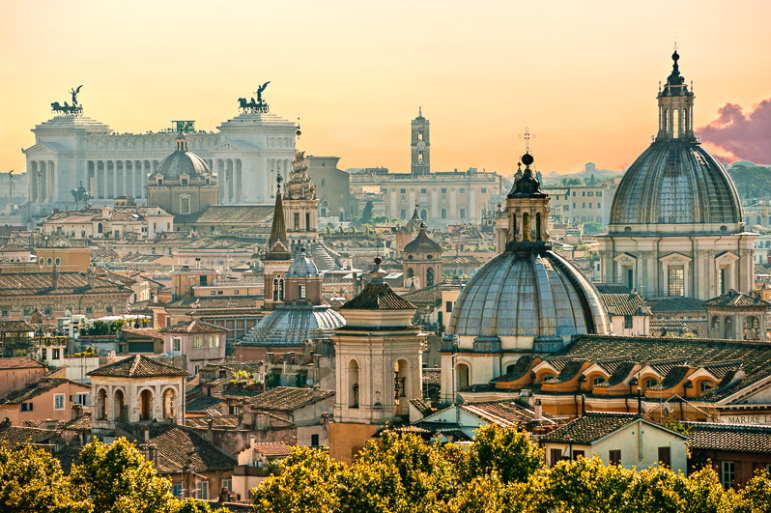
Rome is where most Italy trips begin, and it earns it. You turn a corner between a pharmacy and a coffee bar and walk straight into a 2,000-year-old ruin.
Book these in advance, in this order: the Colosseum sells out weeks ahead in peak season, and so do the Vatican Museums and Sistine Chapel — one of the most visited museum complexes in the world, with lines that wrap the block without a reservation. The Roman Forum is included with your Colosseum ticket; don’t jog through it (that’s where Julius Caesar was cremated). For dinner, cross the river to Trastevere — same city, lower prices, actual Romans.
Florence
Florence is walkable; you can reach the Duomo, the Uffizi, and the Accademia mostly on foot. This compact city produced Michelangelo, Botticelli, and Leonardo within a few generations.
Book Uffizi Gallery tickets at least two weeks ahead and the Accademia (home of Michelangelo’s David) even earlier. Climb the Brunelleschi Dome for the best view in the city. One underrated move: take the 30-minute bus to Fiesole, the hilltop town above Florence, for panoramic views and far fewer crowds.
Venice
Venice is unreasonable in the best way: built on wooden pilings in a lagoon a thousand years ago and still standing. One to two nights is right for most first-timers. Take the vaporetto water bus — a single ticket is €9.50 (valid 75 minutes) and runs the whole Grand Canal, with better views than a gondola. Ferry out to Burano, 45 minutes away, for wildly colorful houses and a fraction of the crowds.
Plan around the access fee: on roughly 60 peak dates (April 3–July 26, 2026, 8:30 AM–4 PM), day visitors pay a €5–€10 entry fee to the historic centre — €5 if you register at least four days ahead, €10 if later. Overnight guests are exempt but still must register.
Check Venice’s official access-fee portal for current dates.
Tuscany
Tuscany really does look like every picture you’ve seen: rolling hills, cypress trees, hilltop medieval towns. Rent a car and drive the Val d’Orcia, a UNESCO World Heritage landscape protected from development, and stop whenever something looks beautiful (constantly). Siena’s Piazza del Campo is one of Europe’s great squares; San Gimignano has its medieval-tower skyline; Pienza is a Renaissance planned town. For wine, the Chianti Classico region between Florence and Siena offers tastings, often free if you show up in person.
Amalfi Coast
The Amalfi Coast road is gorgeous and nerve-wracking — hairpin turns and sheer drops. Take the ferry between towns instead; the view from the water is better and your stress levels lower. Positano is the famous one; Praiano, the next town over, is just as beautiful, less crowded, and cheaper.
Naples
Naples is loud and a little chaotic, but it’s the most genuinely Italian city in the country — real, not polished for tourists. And the pizza has no equal anywhere. Da Michele on Via Cesare Sersale serves only margherita and marinara, closes when the dough runs out, and has done so since 1870. Pompeii is a 30-minute train ride away — a Roman city frozen exactly as it was when Vesuvius buried it in 79 AD. Book official Pompeii tickets ahead and budget three hours.
Cinque Terre
The Cinque Terre are five cliffside fishing villages — Monterosso, Vernazza, Corniglia, Manarola, and Riomaggiore — linked by coastal trails and a local train. Buy a Cinque Terre Card to ride the train between villages and walk the open hiking paths. Manarola at sunset is one of the most photographed views in Italy. It’s an easy add-on between Florence and the north.
Lake Como
Lake Como delivers mountain-backed water, elegant villas, and lakeside towns like Bellagio, Varenna, and Menaggio, connected by a simple network of ferries. It’s an easy day trip or overnight from Milan and a relaxed contrast to the busier southern coast.
Italy’s high-speed trains are the best way to travel between cities; rent a car only for the countryside.
What’s the best way to get around Italy?
Italy’s high-speed trains are the best way to travel between cities; rent a car only for the countryside. Here’s the quick breakdown:
| Mode | Best For | Notes |
| High-speed train | City-to-city | Rome–Florence ~1.5 hrs, Florence–Venice ~2 hrs. Book early on Trenitalia or Italo for the lowest fares. |
| Rental car | Tuscany, Umbria, Puglia, Sicily, hill towns | Never drive into historic centres — ZTL camera zones auto-fine you weeks later. Park outside and walk in. |
| Ferry | Amalfi, Cinque Terre, Sicilian islands | Scenic and often faster than the road. |
| Walking + metro | Rome, Florence, Venice | Cities are best on foot; use Rome’s Metro Lines A and B for distance. |
Do I Need a Visa or ETIAS for Italy in 2026?
Americans don’t need a visa for stays up to 90 days in the Schengen Zone. But entry rules are changing in 2026, so know two systems:
- EES (Entry/Exit System): The EU’s new biometric border check (fingerprints and a facial photo on arrival) began rolling out in late 2025 and is being phased in through 2026. Expect a quick kiosk step at the airport.
- ETIAS: A separate pre-travel authorization (similar to the U.S. ESTA), expected to launch late 2026 at around €20. It is not yet required — confirm its status before you travel.
Italy Travel Tips That Actually Matter
- Pre-book major attractions. Colosseum, Vatican Museums, Uffizi, and the Accademia all need timed-entry tickets.
- Use a no-foreign-transaction-fee credit card to avoid 3% on every purchase.
- Real gelato sits in covered metal tins. Giant fluffy colorful piles in the window mean tourist trap; look for artigianale.
- Aperitivo (6–8 PM) is the best value in Italy — many bars include free snacks with a drink.
- Order the menù del giorno — a 3-course set lunch, usually €12–15, is how locals eat well for less.
- First Sunday of the month is free at many state museums, including the Colosseum and Roman Forum.
- Coffee rules: espresso at the bar is €1–1.50; sitting at a landmark table makes it €5–6. Cappuccino is a morning drink.
- Wear broken-in shoes — Italian cities are almost all cobblestone.
- Churches are free and full of masterpieces (two Caravaggios sit inside Rome’s Santa Maria del Popolo).
- Leave one day unplanned — the best Italy stories start with “we were just wandering.”
How Much Does a Trip to Italy Cost?
| Travel Style | Daily Budget (Per Person) |
| Budget (hostels, street food, trains) | $80–120 |
| Mid-range (3-star hotels, sit-down meals) | $180–250 |
| Comfortable (boutique hotels, nice dinners) | $300–400 |
| Luxury (lakeside villas, cliffside suites) | $500+ |
For a first trip, 10 to 14 days covers Rome, Florence, Tuscany, and Venice without feeling rushed.
Frequently Asked Questions
How many days do I need in Italy for a first trip?
Ten to fourteen days hits the main highlights without rushing. Less than seven days means you’ll spend most of your time commuting between cities.
Is it safe to travel to Italy right now?
Yes. Italy is at the U.S. State Department’s Level 2 (“Exercise Increased Caution”) for terrorism risk — the same as France, Germany, and the UK. The main practical concern is pickpocketing in crowds, not danger.
Is the tap water in Italy safe to drink?
Yes, everywhere. Rome’s water comes from Apennine springs via ancient aqueducts, and the city has thousands of free public fountains called nasoni. Bring a refillable bottle.
What’s the best city in Italy for food?
Bologna is widely called the food capital (home of real ragù). Naples wins for pizza, Rome for carbonara and cacio e pepe, and Modena for balsamic and fine dining.
When should I book my Italy trip for the best prices?
Flights 3–5 months ahead, peak-season hotels 2–3 months ahead, attraction tickets 2–4 weeks ahead (longer in summer), and high-speed train tickets 4–6 weeks ahead.
Do I need ETIAS to visit Italy in 2026?
Not yet. ETIAS is expected to launch in late 2026. The EU’s biometric EES border check is being phased in through 2026. Check both before you travel.
Italy in 2026: Still Worth Every Penny
People have predicted Italy’s tourism overload for years. It’s busy in spots — August in Rome is a lot, and Venice is managing real over-tourism. But the things that make Italy special don’t get used up. The food is still extraordinary, the history is still everywhere, and the warmth you get from treating people with respect — a few words of Italian, a “please” and “thank you” — is still completely real.
Go in the right season, book what needs booking, eat where locals eat, and leave room to get lost. That formula has worked for decades, and it still works now.
Ready to stop researching and start going?
You’ve got the full picture — now you just need the trip. GoGo Trips USA builds Italy itineraries for travelers, so there’s no piecing together a dozen booking sites and no wasted days. Whether you want the classic 10-day Rome–Florence–Venice loop or something off the beaten path, it’s already mapped.
👉 Plan your Italy trip at gogotripsus.com
All Categories
Recent Posts

Cancun Travel Guide 2026 to 2027: Best Time to Visit, Things to Do and Tips

Best Time to Travel to Bali, Indonesia (2026 to 2027): Month by Month Guide

Places to Visit in Jaipur: Top 10 Spots, Ticket Prices and Timings