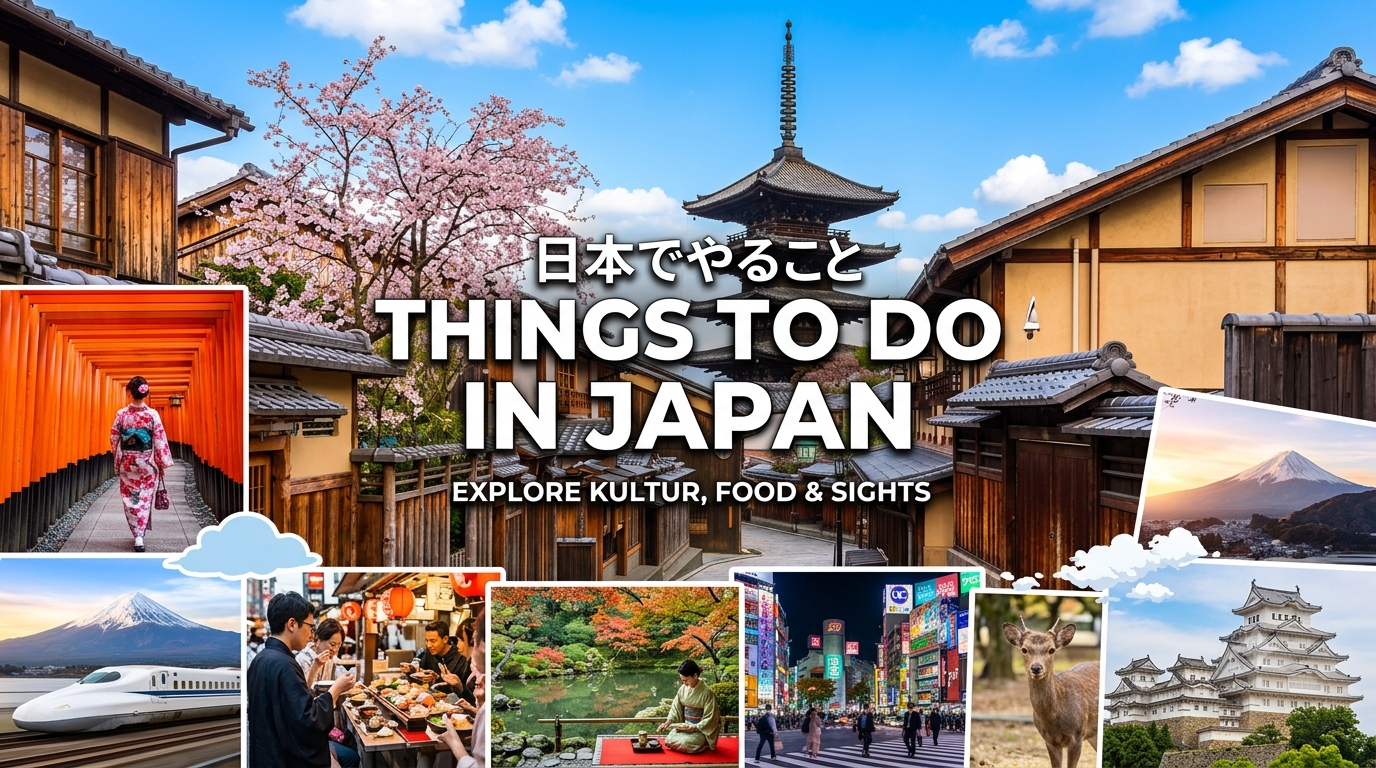
Quick answer: The best things to do in Japan are walking the red gates of Fushimi Inari in Kyoto, crossing Shibuya Crossing in Tokyo, seeing Mount Fuji from Lake Kawaguchiko, feeding the deer in Nara, eating street food in Osaka, soaking in an onsen (hot spring), and riding the bullet train. Most first-time visitors spend 7 to 14 days on the Tokyo, Kyoto and Osaka route.
Japan is having a big year. More Americans visited Japan in June 2026 than in any June before, and a lot changed for tourists this year. There are new taxes, new ticket rules and new places to see.
This guide keeps it simple. You get the best places to visit in Japan, what they cost, the best time to go, and the 2026 rules you need to know before you book.
Top 10 Things to Do in Japan
Short on time? These are the top things to see in Japan and the must-see places in Japan most travelers put on their first list.
| # | Thing to do | Where | Cost (approx.) | Best time |
| 1 | Walk the torii gates at Fushimi Inari | Kyoto | Free | Before 8 a.m. |
| 2 | Cross Shibuya Crossing and see it from Shibuya Sky | Tokyo | Free / from ¥2,500 | Sunset |
| 3 | See Mount Fuji from Chureito Pagoda | Kawaguchiko | Free | Oct to Feb (clear skies) |
| 4 | Visit Senso-ji Temple in Asakusa | Tokyo | Free | Early morning |
| 5 | Feed the deer and see the Great Buddha | Nara | ¥800 (Todaiji) | Weekday mornings |
| 6 | Eat street food in Dotonbori | Osaka | Pay as you go | Evening |
| 7 | See the Golden Pavilion (Kinkaku-ji) | Kyoto | ¥500 | 9 a.m. opening |
| 8 | Visit the Peace Memorial Park and Miyajima | Hiroshima | ¥200 museum + ¥100 island tax | Full day |
| 9 | Soak in an onsen (hot spring) | Hakone and many other towns | ¥1,000 and up | Any season |
| 10 | Ride the Shinkansen bullet train | Nationwide | About ¥14,000 Tokyo to Kyoto | Any time |
Prices are adult prices in Japanese yen. $1 is about ¥150 to ¥156 in September 2026, so ¥1,000 is roughly $6.50.
What’s New in Japan for 2026 (Read This Before You Book)
Most guides to places to visit in Japan skip this part. These changes affect your budget, so check them first.
- Departure tax tripled. Since July 1, 2026, everyone leaving Japan pays ¥3,000 (about $19), up from ¥1,000. It is added to your airline ticket, so you do not pay it at the airport.
- Tax-free shopping is changing on November 1, 2026. You will pay the full price, including the 10% tax, in the store. You then get the tax back at the airport before check-in. The minimum spend stays at ¥5,000 per store, and you must show the unused items when you leave.
- JR Pass costs more from overseas sellers. From October 1, 2026, travel agencies outside Japan charge ¥53,000 for the 7-day pass. The official Japan Rail Pass website still lists ¥50,000.
- Higher prices for foreign visitors at some sights. Himeji Castle now costs ¥2,500 for non-residents, up from ¥1,000 (since March 1, 2026). Kids under 18 get in free.
- Kyoto hotel tax went up. Since March 2026, the tax runs from ¥200 to ¥10,000 per person, per night, based on your room rate.
- Mount Fuji hikers pay ¥4,000. You must book online, and trailheads close from 2 p.m. to 3 a.m. unless you have a mountain hut booking.
- New places opened. PokéPark Kanto, the first permanent outdoor Pokémon park, opened in February 2026 at Yomiuriland near Tokyo. The Edo-Tokyo Museum reopened on March 31, 2026 after a long renovation.
- Heads up on closures. Hiroshima Castle’s main keep closed for work in March 2026, and the five-story pagoda at Itsukushima Shrine on Miyajima is under repair until December 2026.
Best Things to Do in Tokyo
Tokyo is where most US flights land, and it is the easiest place to start sightseeing in Japan. Give it at least three days. The city is huge, but the trains make it simple to get around.
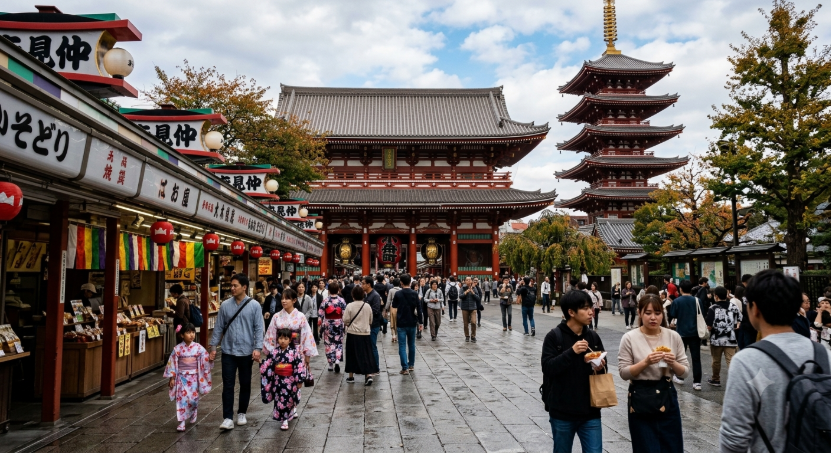
1. Visit Senso-ji Temple and Asakusa
Senso-ji is Tokyo’s oldest temple and one of the top tourist attractions in Japan. Walk through the giant Kaminarimon Gate, then shop for snacks on Nakamise Street. The temple grounds are free and always open. Go before 8 a.m. to beat the tour groups.
2. Cross Shibuya Crossing, Then See It From Above
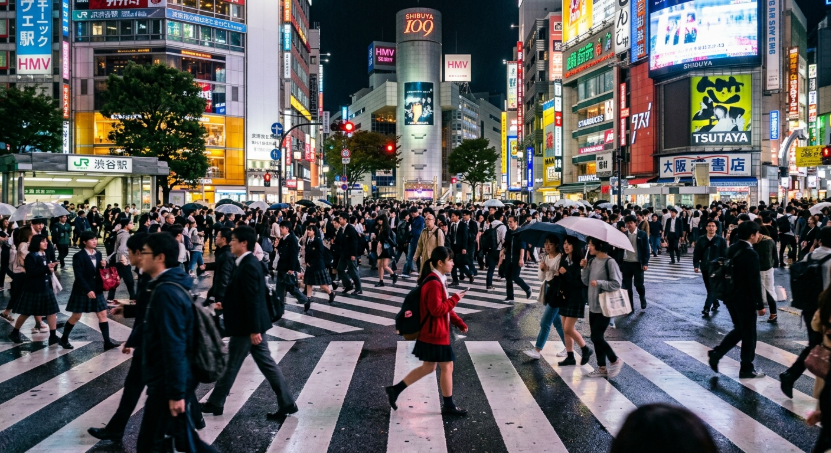
Hundreds of people cross at once when the lights turn green. It is free and fun to join in. For the best view, go up to Shibuya Sky, an open-air rooftop deck. Tickets start at about ¥2,500. Sunset slots sell out, so book online early.
3. Step Into teamLab Digital Art
teamLab Planets (Toyosu) and teamLab Borderless (Azabudai Hills) are digital art museums where lights, water and flowers move around you. Adult tickets start at ¥3,600. Planets tickets are sold online only, not at the door. Plan 2 to 3 hours.
4. Take in the View From Tokyo Skytree
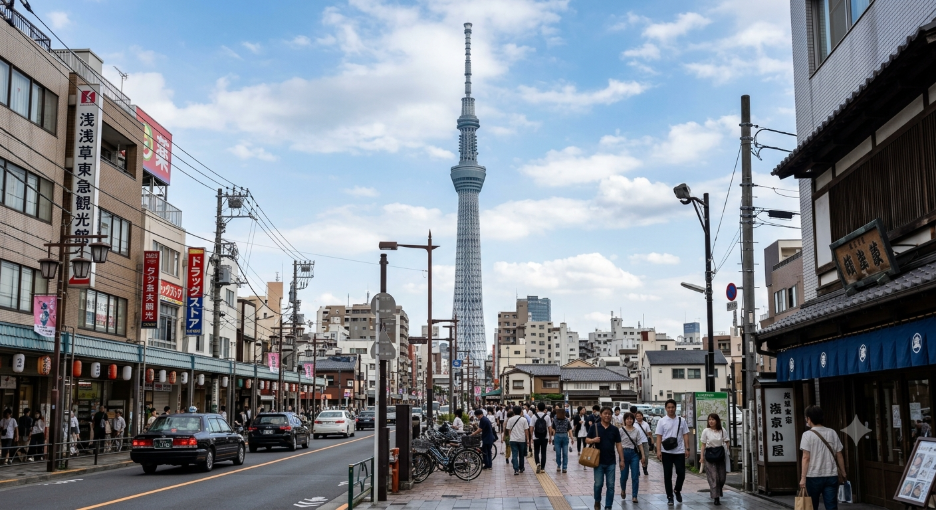
At 634 meters, Skytree is the tallest tower in Japan. The Tembo Deck at 350 meters costs from ¥2,100 if you book ahead on a weekday. It sits close to Asakusa, so pair the two in one morning.
5. Eat Your Way Through Tsukiji Outer Market
The old fish market moved, but the outer market is still full of food stalls. Try fresh sushi, grilled scallops and tamagoyaki (sweet omelet on a stick). Go in the morning. Many stalls close by early afternoon.
6. Walk Harajuku and Meiji Jingu
Meiji Jingu is a quiet Shinto shrine inside a big forest. Entry is free. Right next door is Takeshita Street in Harajuku, known for crepes, cute fashion and colorful candy. It is a great mix of old and new Japan in one hour.
7. Explore Akihabara for Anime and Games
Akihabara is the center of anime, manga and video games. Visit multi-floor arcades, try the gachapon (capsule toy) machines, and shop for retro games. Maid cafés are here too, if you want to try one of Japan’s quirkier experiences.
8. Drink and Eat in Shinjuku’s Tiny Alleys
Omoide Yokocho (“Memory Lane”) is a narrow alley of smoky grill stalls. Golden Gai has around 200 tiny bars, many with only a few seats. Some bars charge a cover fee, so check the sign on the door.
9. Watch Sumo Wrestling
Tokyo hosts three of the six yearly sumo tournaments, in January, May and September, at Ryogoku Kokugikan. Tickets sell out fast. Outside tournament months, some tour companies offer morning practice visits at a sumo stable.
10. Visit PokéPark Kanto (New in 2026)
This is the first permanent outdoor Pokémon park in the world, inside Yomiuriland on the west side of Tokyo. It is a strong pick for families and fans. Book tickets ahead, since the park is new and busy.
Read more: Japan in December travel guide
Things to Do in Japan Near Tokyo (Easy Day Trips)
These places sit 1 to 2.5 hours from central Tokyo. You can see each one in a day and be back for dinner.
11. See Mount Fuji from Lake Kawaguchiko
For the classic Mount Fuji photo, go to Chureito Pagoda in Fujiyoshida. It is about 400 steps up, and the view is free. Fuji hides in clouds a lot, so go early in the day. Late autumn and winter give the clearest views.
12. Climb Mount Fuji (July to September Only)
The climbing season runs July 1 to September 10 on the Yoshida and Subashiri trails, and July 10 to September 10 on the other two. The fee is ¥4,000 per person, and you must book online. On the Yoshida Trail, you need proper hiking shoes, warm clothes and rain gear, or staff can turn you back.
13. Relax in Hakone
Hakone is a hot spring town with Fuji views. Ride the ropeway over the steaming Owakudani valley, take a boat across Lake Ashi, and stay the night at a ryokan (traditional inn) with its own onsen.
14. Visit the Shrines of Nikko
Nikko’s Toshogu Shrine is a UNESCO World Heritage Site covered in gold and carvings. The area is also known for waterfalls and some of the best fall colors in Japan from mid to late October.
15. See the Great Buddha in Kamakura
Kamakura is about an hour from Tokyo. See the giant bronze Buddha, walk to seaside temples, and snack along Komachi Street. It is a relaxed day out, close to the beach.
Must-See Places in Kyoto
Kyoto has some of the most famous places in Japan. It was the capital for over 1,000 years. It has about 1,600 temples, so pick a few and go early. Crowds build fast after 9 a.m.
16. Walk the Red Gates at Fushimi Inari Shrine
Thousands of orange torii gates line the path up Mount Inari. The shrine is free and open 24 hours a day. The full hike to the top and back takes 2 to 3 hours, but most people turn around at the halfway viewpoint. From Kyoto Station, take the JR Nara Line for 5 minutes to Inari Station.
17. See the Golden Pavilion (Kinkaku-ji)
Kinkaku-ji is a temple covered in gold leaf that sits on a calm pond. Entry is ¥500, and it is open 9 a.m. to 5 p.m. Bring cash for the ticket.
18. Walk Through the Arashiyama Bamboo Grove
Tall green bamboo towers over a short walking path. Go at sunrise if you want photos without crowds. Nearby, visit Tenryu-ji Temple and the monkey park on the hill.
19. Explore Gion and Kiyomizu-dera
Gion is Kyoto’s old geisha district, full of wooden teahouses. Walk up the stone lanes to Kiyomizu-dera, a temple with a huge wooden stage and city views. Some private lanes in Gion are now off-limits to tourists, and taking photos of geiko without asking is not allowed. Follow the signs.
20. Visit the Nintendo Museum in Uji
The Nintendo Museum opened in 2024 south of Kyoto. It shows Nintendo’s history, from playing cards to the Switch, with hands-on games. Adult tickets cost ¥3,300, but you must enter a lottery about three months ahead. It is closed on Tuesdays.
Read more: best places to experience Christmas in Japan
More Places to Visit in Japan: Nara, Osaka, Himeji and Hiroshima
These cities are all easy to reach from Kyoto by train. Many travelers use Osaka or Kyoto as a base and do day trips.
21. Feed the Deer in Nara
More than 1,000 wild deer walk freely around Nara Park. Buy deer crackers for around ¥200, and some deer will bow to you. Watch your map and snacks, because they nibble. Then visit Todaiji Temple (¥800), home to one of the largest bronze Buddhas in Japan.
22. Eat Street Food in Osaka’s Dotonbori
Osaka is Japan’s food capital. Walk Dotonbori under the famous Glico running man sign and try takoyaki (octopus balls), okonomiyaki (savory pancake) and kushikatsu (fried skewers). Visit Osaka Castle in the morning and Kuromon Market for lunch.
23. Spend a Day at Universal Studios Japan
Super Nintendo World is the big draw here. A 1-day pass costs ¥8,400 to ¥11,900 based on the date. You must buy online, as the gate ticket booth closed in 2025. Entry to the Nintendo area may need a free timed ticket from the app, so open it right after you enter.
24. Visit Himeji Castle
Himeji Castle is Japan’s best original castle, known as the “White Heron.” It is a quick Shinkansen stop between Osaka and Hiroshima. Non-residents pay ¥2,500. Plan about 2 hours inside.
25. Learn History at Hiroshima Peace Memorial Park
The Peace Memorial Museum tells the story of the 1945 atomic bombing. It is moving and worth the visit. Adult entry is only ¥200. See the Atomic Bomb Dome, a UNESCO site, in the same park.
26. See the Floating Torii Gate on Miyajima
Take a short ferry from Miyajimaguchi to Miyajima Island. Visitors pay a ¥100 island tax. The big red torii gate looks like it floats at high tide. At low tide you can walk right up to it. Check the tide times before you go.
Read more: why South Korea tops everyone’s travel bucket list
Unique and Fun Things to Do in Japan
These are the activities in Japan people talk about most after their trip. Many of them cost little and fit into any plan.
27. Soak in an Onsen
An onsen is a natural hot spring bath. You wash first at the seated showers, then enter the bath without a swimsuit. Most baths split men and women. Many public onsen do not allow tattoos, so look for “tattoo-friendly” places or book a private bath (called kashikiri).
28. Stay a Night in a Ryokan
A ryokan is a traditional inn with tatami mats, futon beds and a big multi-course dinner. You wear a cotton robe called a yukata around the inn. One night is enough for most travelers, and it is often the best memory of the trip.
29. Eat at a Konbini (Convenience Store)
This sounds small, but Reddit travelers rave about it. 7-Eleven, Lawson and FamilyMart sell fresh onigiri (rice balls), egg sandwiches, fried chicken and hot coffee, all day and night. It is a cheap, tasty breakfast.
30. More Cool and Unusual Things to Do in Japan
- Sing karaoke in a private room. You pay by the hour, and many places include drinks.
- Sleep in a capsule hotel for one night. It is clean, cheap and very Japanese.
- Try a tea ceremony or rent a kimono in Kyoto for a few hours.
- Stay at a temple in Koyasan, where monks serve plant-based food and hold a morning prayer.
- Visit a cat café in Tokyo or Osaka.
- Watch a baseball game. Fans sing and cheer as a team. Tokyo Dome and Koshien Stadium near Osaka are the most famous.
- Play in a game center (arcade) and try the crane games.
Read more: 12 romantic and thrilling tours every couple should experience
What to Do in Japan by Season
Japan changes a lot from season to season. Here is what to plan for each one.
| Season | What to do | Where | Good to know |
| Spring (Mar to May) | Cherry blossom picnics (hanami) | Tokyo, Kyoto, Hirosaki | Peak is usually late March to early April. Hotels book up months ahead. |
| Summer (Jun to Aug) | Festivals, fireworks, climbing Mount Fuji | Kyoto (Gion Matsuri in July), nationwide | Hot and humid. June is the rainy season. |
| Autumn (Sep to Nov) | Red and gold fall leaves | Nikko, Kyoto, Tokyo | Kyoto peaks mid-November to early December. |
| Winter (Dec to Feb) | Snow monkeys, skiing, Sapporo Snow Festival | Nagano, Hokkaido | Clearest Mount Fuji views. Snow festival is in early February. |
Try to avoid Golden Week (April 29 to May 5) and Obon in mid-August. That is when people in Japan travel, and trains and hotels fill up.
See the Snow Monkeys in Nagano
At Jigokudani Monkey Park, wild monkeys sit in hot spring pools in the snow. January and February are the best months. It is about a 30-minute forest walk from the bus stop. Adult entry has been ¥800, but the park now asks for dated online tickets on busy days and announced a fee change in September 2026, so check the official site before you go.
Read more: top 10 ski destinations for a winter wonderland getaway
Places to Visit in Japan Off the Beaten Path
Been to Japan before, or want fewer crowds? These are some of the best places to go in Japan for a quieter trip.
- Takayama and Shirakawa-go: An old town with a morning market, plus a village of thatched-roof farmhouses nearby.
- Kanazawa: Home to Kenroku-en, one of Japan’s top three gardens, and a well-kept samurai district.
- Okinawa: Beaches, clear water and snorkeling with sea turtles in the Kerama Islands.
- Hokkaido: Fresh seafood, summer lavender fields in Furano, and powder snow in Niseko.
- Naoshima: A small island in the Seto Inland Sea full of modern art museums.
Free Things to Do in Japan
Japan does not have to be expensive. There is plenty of free stuff to do in Japan, and many of the best activities in Japan cost nothing.
- Walk Fushimi Inari Shrine in Kyoto
- Visit Senso-ji Temple and Meiji Jingu in Tokyo
- Cross Shibuya Crossing
- Enjoy the free observation deck at the Tokyo Metropolitan Government Building in Shinjuku
- Stroll the Philosopher’s Path in Kyoto
- Walk through Nara Park (the park itself is free)
- Explore Dotonbori at night in Osaka
What Do People in Japan Do for Fun?
If you want to see how locals relax, do what they do. People in Japan sing karaoke with friends after work, meet at izakaya (casual pubs), soak at the local onsen, and head to baseball games in summer. Weekends often mean shopping, arcades, hiking or a trip to a hot spring town. Local festivals (matsuri) fill the summer calendar, with food stalls, dancing and fireworks.
Sample Japan Itineraries
Not sure what to do in Japan with only a week or two? Here are two simple routes that work for most first-timers.
7 Days in Japan
- Days 1 to 3: Tokyo (Asakusa, Shibuya, Harajuku, Shinjuku, teamLab)
- Day 4: Day trip to Mount Fuji and Kawaguchiko, or Hakone
- Days 5 and 6: Kyoto (Fushimi Inari, Kinkaku-ji, Arashiyama, Gion), with half a day in Nara
- Day 7: Osaka (Dotonbori, Osaka Castle), then fly home from Kansai Airport
10 Days in Japan
Follow the 7-day plan, then add Himeji Castle, Hiroshima and Miyajima (2 days) and one more day in Osaka for Universal Studios Japan. If you prefer nature, swap Hiroshima for Kanazawa and Takayama.
Want this planned for you? Go-Go Trips runs a 9-day Japan Cherry Blossom tour covering Tokyo, Hakone, Nara, Kyoto, Osaka and Hiroshima, plus a Japan with Korea tour if you want two countries in one trip.
Japan Travel Tips for US Travelers
A little prep saves a lot of stress. These are the tips first-time visitors say they wish they knew.
Entry and Visa
- US passport holders do not need a visa for tourist stays of up to 90 days.
- Indian passport holders living in the US (including green card and H-1B holders) do need a visa. Japan’s visa rules follow your passport, not where you live. People living in the US can apply online through the JAPAN eVISA system. Visa fees went up in 2026, so check the current fee when you apply.
- Fill in Visit Japan Web before you fly. It gives you QR codes for immigration and customs, which speeds up arrival.
Read more: guide to sleeping comfortably on long-haul flights
Getting Around
- Is the JR Pass worth it? Often not. A round trip from Tokyo to Kyoto costs about ¥28,000, while the 7-day pass costs ¥50,000 or more. It pays off mainly if you also go to Hiroshima or farther. The fastest Nozomi trains also need an extra fee with the pass.
- Get an IC card. Add Suica or PASMO to Apple Wallet on your iPhone, or buy a card at the station. Tap it for trains, buses and convenience stores.
- Send your big bags ahead. Luggage forwarding (takkyubin) costs about the same as a nice lunch and makes train days easy. On the Tokyo to Osaka bullet train, very large suitcases need a special seat booking.
Money and Budget
- Carry some cash. Small shops, temples and food stalls may not take cards. 7-Eleven ATMs accept most US cards.
- Tipping is not expected in Japan and can even confuse people.
- A mid-range trip costs roughly $150 to $250 per person per day, not counting flights. That covers a hotel, trains, meals and a few tickets.
Read more: 10 proven ways to find cheap flights
Food Tips for Vegetarian Travelers
Many Indian American travelers eat vegetarian, and Japan can be tricky. Most miso soup and noodle broth use dashi, a stock made from fish. Ask for shojin ryori, the plant-based Buddhist temple food served in Kyoto and Koyasan. Tokyo, Osaka and Kyoto also have many Indian restaurants, and the HappyCow app lists vegetarian and vegan spots nearby. Konbini stores sell plain onigiri, fruit and salads for easy backup meals.
Simple Etiquette
- Take off your shoes when you see a step up or a row of slippers.
- Keep your voice low and avoid phone calls on trains.
- Carry your trash. Public bins are rare, so bring a small bag.
- Do not eat while walking in busy streets. Eat near the stall where you bought the food.
Plan Your Japan Trip With Go-Go Trips
Japan rewards good planning. Tickets for places like teamLab, the Nintendo Museum and Universal Studios sell out, and cherry blossom hotels fill up months ahead. If you want flights, hotels and sightseeing handled in one package, see our Asia and Far East tours or contact our team for a custom plan.
FAQs About Things to Do in Japan
What is the number one thing to do in Japan?
Of all the best things to do in Japan, most travelers rank the torii gates at Fushimi Inari Shrine in Kyoto first. It is free, open 24 hours, and unlike anywhere else. In Tokyo, Senso-ji Temple and Shibuya Crossing are the top picks.
How many days do you need in Japan?
Plan at least 7 days for Tokyo, Kyoto and Osaka. With 10 to 14 days, you can add Hiroshima, Miyajima, Hakone or the Japanese Alps without rushing.
What is the best month to visit Japan?
Late March to early April (cherry blossoms) and November (fall leaves) are the most popular times. For fewer crowds and good weather, try May after Golden Week or October.
Do US citizens need a visa for Japan?
No. US citizens can visit Japan visa-free for up to 90 days as tourists. Non-US passport holders, such as Indian citizens living in the US, need a visa.
How much does a trip to Japan cost from the USA?
Round-trip flights from the US often run $800 to $1,600 in economy, based on your city and season. On the ground, a mid-range trip costs about $150 to $250 per person per day.
Is the Japan Rail Pass worth it in 2026?
Only for long routes. If you just go Tokyo to Kyoto and back, single tickets are cheaper. The pass makes sense if you also travel to Hiroshima, Kyushu or northern Japan within 7 days.
What are fun things to do in Japan with kids?
Try PokéPark Kanto, Universal Studios Japan, teamLab, the deer in Nara, Tokyo Disneyland and DisneySea, and the Ghibli Museum in Tokyo. Kids under 18 also get into Himeji Castle for free.
What are some unique things to do in Japan?
Stay in a ryokan, soak in an onsen, sleep in a capsule hotel, spend a night at a temple in Koyasan, and see the snow monkeys in Nagano. These are experiences you will not find at home.
What is the new departure tax in Japan?
Since July 1, 2026, the departure tax is ¥3,000 per person (about $19). It is included in your plane ticket price.
Is Japan safe for tourists?
Yes. Japan is one of the safest countries in the world, with low crime and very clean public spaces. Just watch for summer heat, earthquakes (follow local alerts) and busy train platforms.
Prices and rules in this guide were checked in September 2026. Ticket prices in Japan change often, so confirm on the official site before you go.