Best Places to Visit in Croatia in 2026: Full Travel Guide
Best Places to Visit in Croatia in 2026: Full Travel Guide
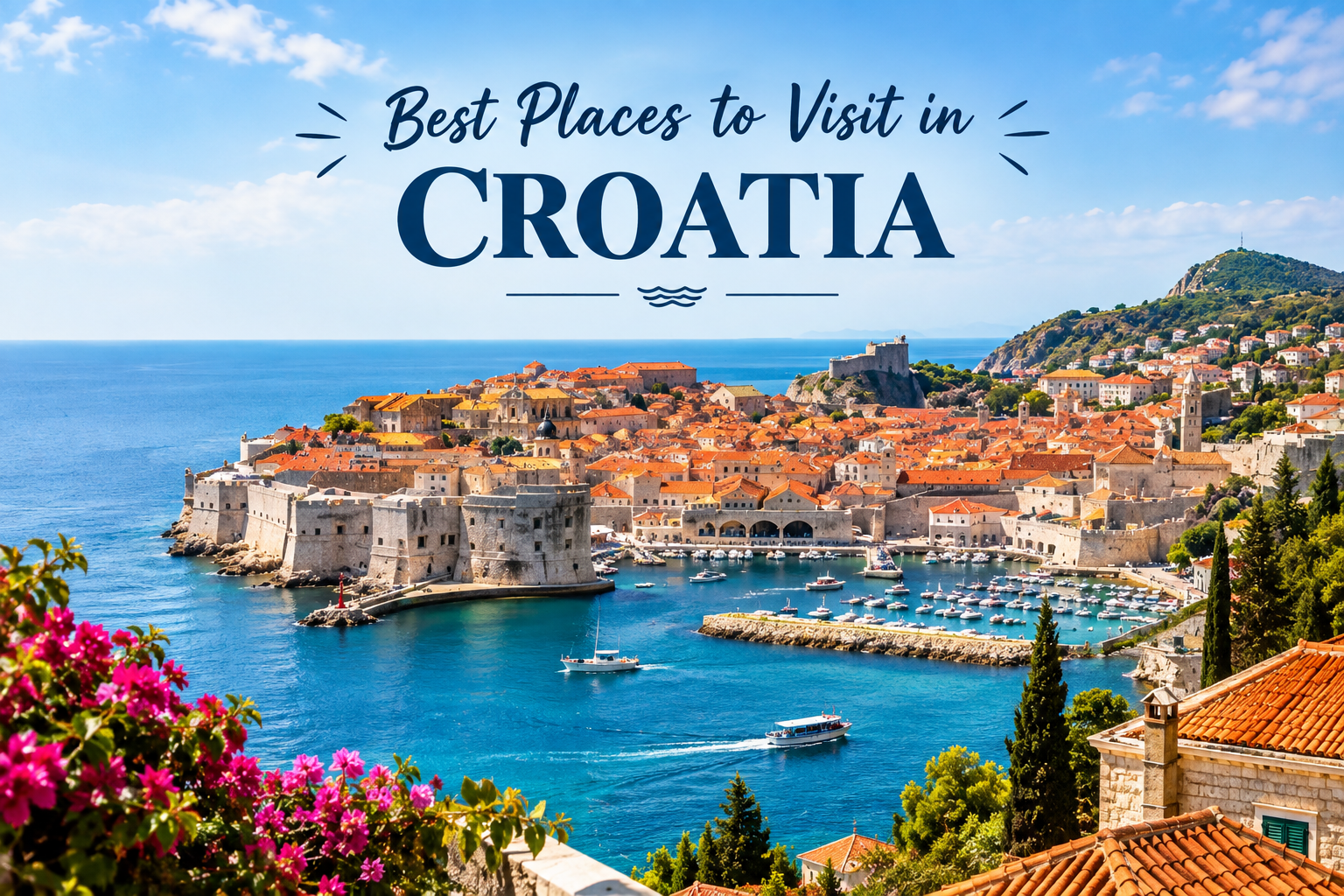
Croatia sits on the Adriatic coast, across the water from Italy, and packs walled old towns, more than a thousand islands, and waterfall parks into a country you can drive across in a few hours. That’s the main reason travelers pick Croatia over other Mediterranean spots: you get beach time, history, and nature in one trip, without long transfers between them.
It also helps that Croatia uses the euro and belongs to the Schengen Area, so getting in from most of Europe is simple, and cards work almost everywhere.
This guide covers the best places to visit in Croatia, and for each one: the nearest airport, how to get around, where to eat, where to stay, and what it costs to get there by cab or car.
Best Places to Visit in Croatia
- Dubrovnik: walled Old Town, city walls, Game of Thrones sites
- Split: Diocletian’s Palace, main ferry hub
- Plitvice Lakes National Park: waterfalls and boardwalks
- Hvar: nightlife and beach clubs
- Zadar: Sea Organ, calmer base, closest airport to a city center
- Korčula: quiet old town, vineyards
- Zagreb: café culture, cheapest major city
- Krka National Park: waterfalls you can swim in
- Trogir: small UNESCO old town near Split
- Istria (Pula, Rovinj): truffles, wine, Roman ruins
Read more: Hidden Gems in Florence, Italy
Best Cities to Visit in Croatia
Dubrovnik
Dubrovnik’s Old Town is a walled city from the 13th century. You can walk through the full city wall loop in about two hours, and it gives you the best view of the red rooftops and the sea. Dubrovnik is also where much of Game of Thrones was filmed, which is why fans recognize Fort Lovrijenac and the Jesuit Staircase.
Nearest airport: Dubrovnik Airport (DBV), about 20 km from the Old Town.
Getting into town: A taxi or Uber/Bolt runs roughly €30–47. The Atlas shuttle bus costs about €7 per person. If you’re arriving late at night, book a transfer in advance, since taxis and rideshare cars thin out after midnight.
Getting around once there: The Old Town is car-free, so you’ll walk everywhere inside it. Bolt and Uber both work in Dubrovnik for trips outside the walls.
Renting a car: Only worth it if you’re driving on to Split or the Pelješac peninsula. Compare rates on Discover Cars or Rentalcars.com before booking, and check if the price includes full insurance.
Where to stay: Inside the Old Town walls for atmosphere (and higher prices), or in Lapad for cheaper stays with a beach nearby and a short bus ride into the center.
Split
Split is built around Diocletian’s Palace, a Roman-era complex that’s still lived in today people run cafés and shops inside the ancient walls. It’s also Croatia’s main ferry hub, so it’s the easiest base for reaching Hvar, Brač, and other Dalmatian islands.
Nearest airport: Split Airport (SPU), about 25 minutes from the city center.
Getting into town: Taxi, Uber, and Bolt all operate here. A ride into the city center costs roughly €25–35. A shared shuttle bus runs cheaper, around €5–8.
Getting around once there: Most of what you’ll want to see is walkable from Diocletian’s Palace. For day trips to Krka or the islands, use the ferry port near the Old Town.
Renting a car: Useful if you’re planning to drive to Trogir, Omiš, or the Makarska Riviera. Book through Discover Cars or a local agency at the airport.
Where to stay: Near the Riva promenade or inside the palace walls for walkability, or in Bačvice if you want to be near the beach and nightlife.
Zagreb
Croatia’s capital is inland, so beach-focused trips often skip it. It’s worth one night for the café culture on Tkalčićeva Street, the Upper Town, and the Dolac open-air market. It’s also the cheapest major Croatian city for food and hotels.
Nearest airport: Zagreb Airport (ZAG), about 17 km from the city center.
Getting into town: Airport shuttle buses run to the main bus station for about €8. Taxi and Uber/Bolt cost roughly €25–35.
Renting a car: Zagreb is the best place in Croatia to pick up a rental if you’re planning a longer road trip, since it has the widest choice of agencies. Compare on Discover Cars before you land.
Where to stay: The Lower Town, near the main square (Ban Jelačić Square), keeps you walkable to most sights.
Zadar
Zadar is smaller and calmer than Split or Dubrovnik. It has Roman Forum ruins, the Cathedral of St. Anastasia, the Sea Organ (a wave-powered sound installation), and a waterfront sunset that Alfred Hitchcock reportedly called one of the best he’d seen.
Nearest airport: Zadar Airport (ZAD), about 8 km (15 minutes) from the Old Town — one of the closest airports to a city center in Croatia.
Getting into town: Taxi or rideshare costs around €15–20. This short, cheap transfer is one reason budget travelers use Zadar as their entry point.
Renting a car: A good pickup point if you’re heading to Plitvice Lakes (about 1.5–2 hours away) or Krka National Park (under an hour).
Where to stay: The Old Town peninsula for walkability, or Borik for a quieter, beach-side stay.
Trogir
Trogir is a small, UNESCO-listed old town a short drive from Split — often nicknamed the “Venice of Croatia.” Its centerpiece is the Cathedral of St. Lawrence, built from 1213 and known for the carved stone portal by local sculptor Master Radovan. Trogir gets far fewer crowds than the bigger coastal cities and works well as a half-day trip or a quieter overnight stay.
Nearest airport: Split Airport (SPU) — Trogir is actually closer to the airport than Split’s city center is, about 15 minutes away.
Getting around: Trogir’s old town is fully walkable. A taxi from Split Airport costs less than the ride into Split itself.
Pula and Istria
Pula has a well-preserved Roman amphitheater, and the wider Istria region is known for truffle hunting, olive oil, and Italian-leaning food. It’s a good pick if you want the coast without the crowds of the south.
Nearest airport: Pula Airport (PUY), a short drive from the city, or Trieste Airport (TRS) in Italy for some travelers coming from the north.
Renting a car: Recommended for Istria, since the best food and wine stops are spread across small hill towns that don’t have good bus links.
Read More: Things to Do in Genoa, Italy
Best Croatian Islands for Island Hopping
Croatia has more than a thousand islands. A handful come up on almost every good itinerary:
- Hvar: the liveliest island, known for nightlife in Hvar Town, lavender fields inland, and boat trips to the Pakleni Islands. Reached by ferry from Split (about 1–2 hours).
- Korčula: quieter than Hvar, with a fishbone-planned old town and vineyards. Ferries run from both Split and Dubrovnik.
- Brač: home to Zlatni Rat, one of Croatia’s most photographed beaches. It’s the closest major island to Split (under an hour by ferry).
- Vis: the most remote of the popular islands, closed to foreign visitors until 1989 and now known for quiet coves.
- Mljet: mostly covered by Mljet National Park, with two saltwater lakes, reached from Dubrovnik.
The Blue Cave on the small island of Biševo, near Vis, is one of the most-booked day trips in Croatia. Sunlight through an underwater opening turns the cave’s water a bright blue for a short window, usually mid-morning. Book this as an organized boat tour you can’t visit independently on a normal schedule.
Getting between islands: Ferries (mostly run by Jadrolinija) connect the mainland to the islands. Book car ferries ahead in summer, since vehicle spots sell out. If you’re not bringing a car, passenger-only ferries and catamarans run more often and don’t need advance booking outside peak weeks.
Best National Parks and Natural Wonders
Plitvice Lakes National Park
Plitvice is Croatia’s oldest national park and a UNESCO World Heritage Site 16 terraced lakes linked by waterfalls, with wooden boardwalks running through them. Entry is timed and ticketed, and prices are highest in peak summer.
Check the park’s official website before you go, since rates and booking rules change by season. Most people visit as a long day trip from Zagreb or Zadar, but staying overnight nearby lets you start before the tour buses arrive.
Krka National Park
Krka is often compared to Plitvice, but it allows swimming near its main waterfall, Skradinski Buk. It’s a shorter detour from Zadar or Split than Plitvice is, which makes it the better pick if your time is tight.
Paklenica and Northern Velebit
For hikers who want mountains instead of water, Paklenica National Park has canyon trails and rock-climbing routes just off the coastal highway.
Croatia’s Best Food Tours
Croatian food changes by region — coastal Dalmatia leans on seafood, olive oil, and grilled fish; Istria is known for truffles, wine, and Italian-style dishes; inland Croatia serves heartier meat and stews.
- Dubrovnik: Small group walking food tours that stop at family-run konobas (taverns) for seafood and local wine.
- Split: Morning market tours through the fish and produce market next to Diocletian’s Palace, paired with a tasting.
- Istria: Truffle hunting tours (often with a dog demonstration) followed by a truffle-based lunch, plus wine tastings at family vineyards.
- Pelješac Peninsula: Oyster and wine tours near Ston, known for its oysters and old salt pans.
Book these through GetYourGuide or Viator, where you can check current reviews and cancellation policies before paying.
Croatia Nightlife
Croatia’s nightlife isn’t spread evenly it’s concentrated in a few spots:
- Hvar Town has the country’s best-known beach clubs and late-night bars, busiest from June to September.
- Zrće Beach, on Pag Island, is sometimes called Croatia’s answer to Ibiza, with open-air superclubs and festivals through summer.
- Split’s Bačvice Bay mixes beach bars with a walkable club scene, right next to the city center.
- Zagreb’s Tkalčićeva Street is the go-to bars year-round, not just in summer.
If you’re not going out to party, all these areas are still fine to walk through in the early evening — the loud late-night crowd mostly builds after 11 PM.
Best Beaches in Croatia
Croatian beaches are mostly pebble or rock, not sand — pack water shoes if your feet are sensitive.
- Zlatni Rat (Brač): a curved gravel spit that’s Croatia’s most photographed beach.
- Banje Beach (Dubrovnik): the closest good beach to the Old Town, with a view of the walls.
- Zrće Beach (Pag): the beach-club and party scene, not a quiet swim spot.
- Punta Rata (Brela, Makarska Riviera): pine trees down to the water, quieter than the islands in early summer.
Best Places to Visit in Croatia by Trip Type
For couples: Dubrovnik’s Old Town at sunset, Hvar’s Pakleni Islands by boat, and a quiet dinner in Rovinj’s harbor in Istria all suit a slower pace.
For families: Split and Rovinj are the easiest bases — flatter old towns, calmer streets, and swimmable beaches close by. Krka’s swimming spots work better for kids than Plitvice, where swimming isn’t allowed.
For beaches and nightlife together: Hvar Town covers both in one place. For the same water without the crowds, Brač or the Makarska Riviera on the mainland are quieter alternatives.
For young adults / a summer party trip: Zrće Beach on Pag Island and Hvar Town are the two main hubs, both busiest from late June through August.
For a first trip with limited time: Dubrovnik, Split, Plitvice Lakes, and one island — Hvar is the most common pick to cover the highlights without excess backtracking.
Money and Currency in Croatia
Croatia uses the euro and has since January 2023. A few practical points:
- Cards are accepted almost everywhere, including small shops and taxis. Carry some cash for smaller villages, markets, and older buses.
- ATMs (look for “Bankomat”) are common in every city and most towns. Withdrawing from an ATM usually gets you a better rate than an exchange counter.
- Avoid airport and Old Town exchange booths advertising “0% commission” — the fee is usually built into a worse exchange rate instead.
- Tipping isn’t mandatory but is expected for good service — rounding up or adding 10% at restaurants is standard.
Where to Stay in Croatia
- Dubrovnik: Old Town for atmosphere, Lapad for value and beach access.
- Split: Near Diocletian’s Palace for walkability, Bačvice for beach and nightlife.
- Zagreb: Lower Town, near Ban Jelačić Square.
- Zadar: The Old Town peninsula, or Borik for a quieter stay near the beach.
- Hvar: Hvar Town for nightlife, Stari Grad for a quieter island base.
Book accommodation through Booking.com or Airbnb, and confirm whether your building has an elevator if you’re traveling with heavy luggage or a stroller — many old town buildings don’t.
Best Time to Visit Croatia
- June and September offer warm weather with smaller crowds than peak summer, and most travelers rate this as the best balance.
- July and August are the busiest and most expensive months, with full ferry schedules but long lines.
- April–May suits hiking and park visits, though the Adriatic is still cool for swimming.
- Winter is mild on the coast, but many island ferries and seasonal restaurants scale back.
FAQ
What are the best places to visit in Croatia for a first trip?
Most first-time visitors cover Dubrovnik, Split, Plitvice Lakes National Park, and one island usually Hvar or Korčula since ferries and roads connect all of them without much backtracking.
Is Croatia safe to visit?
Yes. Violent crime is rare, and solo travel, including for women, is common. Petty theft can happen in busy tourist spots like Dubrovnik’s Old Town or Split’s Riva, so keep bags zipped in crowds.
Do I need a visa to visit Croatia?
Croatia is in the Schengen Area. Travelers from the US, UK, Canada, Australia, and similar countries can usually enter visa-free for short stays — confirm current rules before booking, since requirements can change.
What is the nearest airport to Dubrovnik, Split, and Zadar?
Dubrovnik Airport (DBV) is about 20 km from Dubrovnik’s Old Town. Split Airport (SPU) is about 25 minutes from Split’s center. Zadar Airport (ZAD) is roughly 15 minutes from Zadar’s Old Town, one of the shortest airport transfers in the country.
Is Croatia expensive to visit?
Croatia is cheaper than Italy or France but pricier than its Balkan neighbors, especially in Dubrovnik and Hvar during peak summer. Zagreb and inland towns cost noticeably less.
Do I need a car to travel around Croatia?
Not for the Dubrovnik–Split–islands route — ferries, buses, and walkable old towns cover most of it. A car helps Istria and smaller mainland towns off the main coastal route.
Which Croatian Island is best for nightlife versus a quiet trip?
Hvar is the main destination for nightlife. For a similar setting with a slower pace, Vis, Korčula, or Mljet are better choices.
Can I use Uber or taxis in Croatia?
Yes. Uber and Bolt both operate in Zagreb, Split, Dubrovnik, and Zadar. Bolt is often slightly cheaper; installing both apps lets you compare prices before booking a ride.
For official entry rules and current travel advisories, check the Croatian National Tourist Board. For background on Plitvice Lakes and Dubrovnik’s Old City protected status, see the UNESCO World Heritage List.

GoGo Trips
All Categories
Recent Posts
Best Places to Visit in Croatia in 2026: Full Travel Guide
11 Hidden Gems in Florence, Italy: Where Locals Actually Go

15 Best Things to Do in Genoa, Italy in 2026