Top 10 Things to Do in Seville, Spain
Top 10 Things to Do in Seville, Spain
What Is Seville Famous For?
Seville is famous for the Real Alcázar, one of the oldest royal palaces still in use in Europe, and for having the largest Gothic cathedral on earth. It’s also the birthplace of flamenco, a city built around tapas culture, and the historic capital of the Andalusia region in southern Spain. Add near-constant sunshine and appearances in both Game of Thrones and Star Wars, and it’s easy to see why Seville draws travelers who might otherwise head straight to Madrid or Barcelona.
Where to Stay in Seville
Where you sleep shapes how much of the day you spend walking versus sightseeing. These four neighborhoods cover most budgets and travel styles:
- Barrio Santa Cruz — the old Jewish quarter, footsteps from the cathedral and Alcázar. Best for first-timers who want everything within walking distance.
- El Arenal — quieter, riverside, close to the bullring. A good middle ground if Santa Cruz feels too crowded.
- Triana — across the Guadalquivir river, known for ceramics, tapas bars, and a more local pace of life.
- Alameda de Hércules — younger and livelier, with the best nightlife scene in the city.
Top Things to Do in Seville, Spain
1. Tour the Real Alcázar
The Real Alcázar is the single best reason to visit Seville. It’s a working royal palace — the Spanish royal family still stays here — with Mudéjar tilework, carved archways, and garden courtyards where peacocks roam freely. Fans of Game of Thrones may recognize it as the Water Gardens of Dorne. The palace and the adjoining old merchants’ archive were added to the UNESCO World Heritage List in 1987 alongside the cathedral, and tickets sell out on busy days, so book online in advance.
2. See Seville Cathedral and Climb La Giralda
Next door stands Seville Cathedral, the largest Gothic cathedral in the world and the resting place of Christopher Columbus. Inside, a gold-leaf altarpiece is one of the largest in Christendom. Don’t skip La Giralda, the bell tower that started as a 12th-century minaret — instead of stairs, a gently sloped ramp winds to the top (built so guards could ride up on horseback), rewarding you with the best skyline view in the city.
3. Walk Through Plaza de España
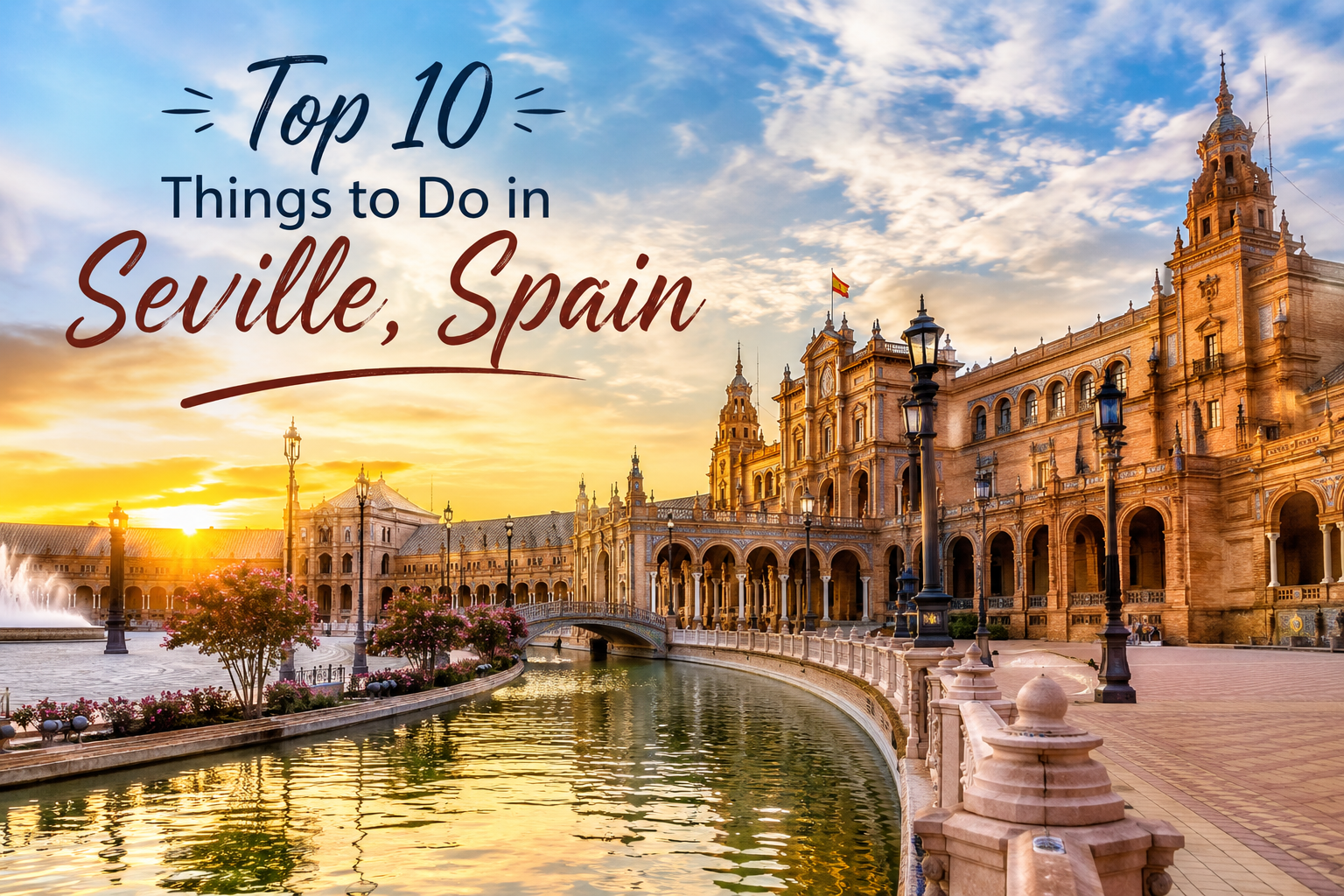
Plaza de España is the postcard shot everyone recognizes, and it’s free to visit. Built for the 1929 Ibero-American Exposition, the semicircular plaza has a small canal for rowing boats and 48 tiled alcoves, one for every Spanish province. It also appeared in Star Wars: Attack of the Clones. Arrive early morning or near sunset for softer light and far smaller crowds.
4. Relax in Parque de María Luisa
Right beside the plaza, this former royal garden is the shadiest, quietest part of central Seville — tiled benches, fountains, and ponds tucked among the trees. It’s the natural place to slow down between sights, especially once the afternoon heat sets in.
5. Wander Barrio Santa Cruz
The old Jewish quarter is Seville’s most atmospheric neighborhood: narrow whitewashed lanes, balconies dripping with flowers, and orange trees on nearly every corner. Skip the map here — getting a little lost is the point, and you’re never far from the cathedral.
6. Watch a Live Flamenco Show
Flamenco was born in this part of Andalusia, and seeing it in a small tablao is a different experience than watching it on video — you feel every stamp of the heel. Triana and Alameda host more casual, spontaneous performances; the Flamenco Dance Museum, founded by dancer Cristina Hoyos, is a good primer if you want context before the show.
7. Cross the River to Triana
Triana has a different rhythm than the old town — ceramics workshops, a lively covered market, and riverside tapas bars. Walk along Calle Betis around early evening, when the historic center glows across the water. It’s the neighborhood locals will point you toward if you ask where they actually eat.
8. Climb the Metropol Parasol (Las Setas)
Locals call this giant timber structure “Las Setas” — the mushrooms. It’s one of the largest wooden buildings in the world, and a rooftop walkway lets you cross the top of it for panoramic views. Sunset is the best time to go, when the rooftops below turn a warm orange.
9. Visit Torre del Oro and Cruise the Guadalquivir
This 13th-century watchtower once guarded the port and now houses a small maritime museum. From the docks nearby, a short river cruise along the Guadalquivir is an easy, low-effort way to see the city from the water, especially near sunset.
10. Tour Plaza de Toros de la Maestranza
Whatever your feelings on bullfighting, this white-and-yellow arena is one of the oldest in Spain and central to the city’s history. A guided tour covers the ring, the museum, and the architecture — worth a stop even if the sport itself isn’t your thing.
5 More Places to See in Seville
- Museo de Bellas Artes — often ranked Spain’s best art museum after the Prado, especially for fans of Murillo.
- Church of El Salvador — built on the site of a former mosque; the second-largest church in the city.
- Calle Sierpes — Seville’s classic shopping street, good for a slow afternoon.
- El Rinconcillo — open since 1670, and generally considered the oldest tapas bar in the city.
- Flamenco Dance Museum — hands-on exhibits, with live shows most evenings.
Best Time to Visit Seville
Spring (March–May) and fall (late September–November) bring warm days without the extreme heat. Spring also covers Seville’s two biggest festivals: Semana Santa (Holy Week) and the Feria de Abril. Summer, particularly July and August, gets brutally hot — plan sightseeing for early morning or evening if that’s when you’re traveling.
How Many Days Do You Need in Seville?
Two to three days works for most first-time visitors. Two days cover the Alcázar, cathedral, Plaza de España, and Santa Cruz; a third gives you room for Triana, a flamenco show, or a day trip to nearby towns like Córdoba or Ronda.
Is Seville Safe?
Seville is generally considered one of the safer major cities in Spain for tourists, with the usual big-city precautions applying — watch your belongings in crowded tourist areas and around the main sights, as pickpocketing is the most common issue reported by visitors.
Tips for U.S. Travelers
- Getting there: Seville’s airport (SVQ) connects through European hubs like Madrid, Barcelona, London, and Paris. The AVE high-speed train from Madrid takes about two and a half hours.
- Money: Spain uses the euro. Cards are widely accepted but keep some cash for smaller bars and markets.
- Getting around: The old town is walkable but wear real shoes — the cobblestones are rough on sandals.
- Book ahead: Reserve Alcázar and cathedral tickets online, especially in summer.
- Eat late: Locals rarely sit down for dinner before 8:30 p.m.
For broader trip planning, Spain’s official tourism board has additional detail on regional transport and seasonal events across Andalusia.
Planning the Rest of Your Trip
Seville pairs naturally with a wider Spain or southern-Europe itinerary. If you’re weighing where else to go, GoGo Trips has more destination guides worth a look:
10 Proven Ways to Find Cheap Flights in 2026
Your Go-To Packing Checklist for Long Journeys
Browse more Europe destinations or see how GoGo Trips can put together your Seville itinerary.
Frequently Asked Questions
What is Seville famous for?
Seville is best known for the Real Alcázar, the world’s largest Gothic cathedral, its role as the birthplace of flamenco, and landmarks like Plaza de España and La Giralda.
Is Seville worth visiting?
Yes. Between the architecture, the food, and the walkable old town, Seville is consistently rated one of Andalusia’s top destinations and a highlight of any southern Spain trip.
How many days do you need in Seville?
Two to three days is enough for most first-time visitors to see the main sights and get a feel for the city.
What is the best time to visit Seville?
Spring (March–May) and fall (late September–November) offer the best weather. Summer can be extremely hot, so plan around midday heat if you’re traveling then.
Is Seville safe for tourists?
Yes, Seville is generally regarded as safe. The main precaution is watching for pickpockets in busy tourist areas, as in most major European cities.
Is it “Seville” or “Sevilla”?
Both refer to the same city. “Sevilla” is the Spanish spelling; “Seville” is the English version used in most travel content.
What are the top attractions in Seville, Spain?
The Real Alcázar, Seville Cathedral and La Giralda, Plaza de España, Barrio Santa Cruz, the Metropol Parasol, and Triana are the essential things to see in Seville.
All Categories
Recent Posts

Cancun Travel Guide 2026 to 2027: Best Time to Visit, Things to Do and Tips

Best Time to Travel to Bali, Indonesia (2026 to 2027): Month by Month Guide
Places to Visit in Jaipur: Top 10 Spots, Ticket Prices and Timings