Top New Zealand South Island Travel Destinations
Top New Zealand South Island Travel Destinations
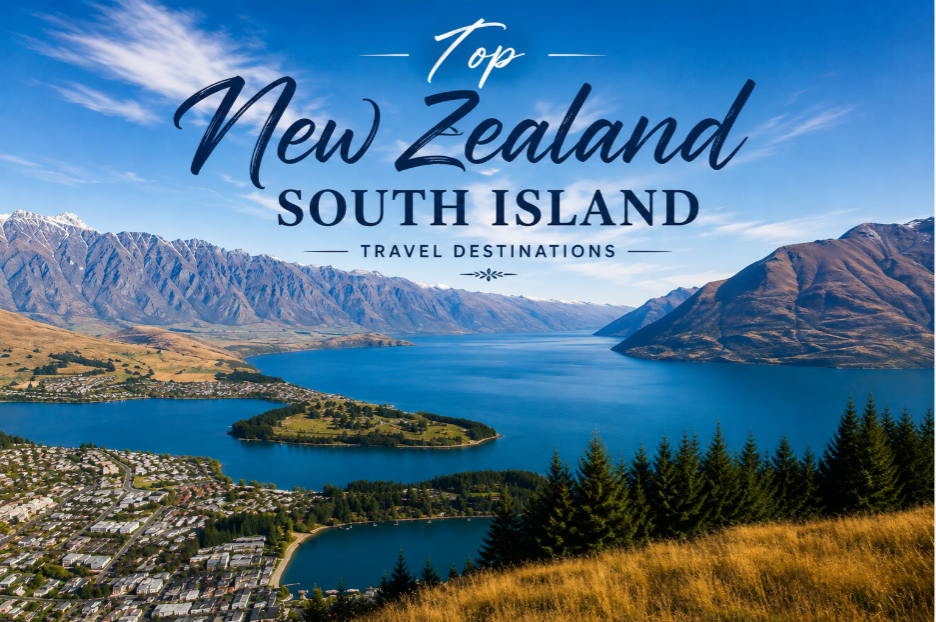
New Zealand’s South Island is where the country’s postcard photos come from. Snow-capped peaks. Glacier lakes. A fjord that looks unreal in person. If you’re mapping out new zealand South Island travel destinations, this guide is your shortcut. It covers where to go, when to go, what it costs to get in, and how much time you need.
Why Travelers Pick the South Island
New Zealand has two main islands. South Island is bigger. It’s far less crowded than the North Island. And it holds nearly all the scenery people picture when they think “New Zealand” the Southern Alps, Fiordland’s cliffs, and lakes so clear they look edited.
Most visitors rent a car and drive between towns. That’s not a workaround. It’s the best way to see the island. The drives themselves past Lake Pukaki, or along the Milford Road are part of the trip.
Best Time to Visit New Zealand’s South Island
New Zealand sits in the Southern Hemisphere, so its seasons run opposite to the US and Europe.
- Summer (December–February): Warmest, longest days, busiest book Milford Sound and Queenstown activities well ahead.
- Autumn (March–May): Fewer crowds, calmer weather, strong mountain visibility around Lake Tekapo and Aoraki/Mount Cook.
- Winter (June–August): Ski season in Queenstown and Wānaka, plus the clearest, darkest nights for stargazing.
- Spring (September–November): Waterfalls run full from snowmelt, and prices drop from summer highs.
There’s no single “best” month. It depends on whether you’re chasing hiking weather, ski season, or a quieter trip with thinner crowds.
Do You Need a Visa for New Zealand in 2026?
US, UK, and most EU passport holders don’t need a traditional visa for a short holiday. But you do need an NZeTA (New Zealand Electronic Travel Authority) before you board, plus the International Visitor Levy (IVL). Here’s what those costs and requires right now:
- Apply through the official NZeTA app (NZD $17) or website (NZD $23) at least 72 hours before you fly, ideally earlier.
- The IVL is a separate NZD $100 charge, paid in the same transaction, funding conservation and tourism infrastructure.
- Combined, most travelers pay roughly NZD $117–$123 total.
- An NZeTA is valid for 2 years and covers multiple visits; each individual stay is capped at 3 months as a visitor.
- Your passport needs at least 3 months of validity beyond your planned departure date.
- Airlines check for your NZeTA before you board it isn’t optional paperwork you can skip.
For the current rules and to apply, go directly through Immigration New Zealand’s official visitor levy page third-party sites often overcharge for the same authorization.
Top New Zealand South Island Travel Destinations
| # | Destination | Best For | Top Thing to Do | Ideal Trip Length |
| 1 | Queenstown | Adventure, nightlife, day-trip base | Skyline Gondola at sunset | 2–3 days |
| 2 | Milford Sound | Fjords, iconic scenery | Milford Sound cruise | Half-day to 1 day |
| 3 | Lake Tekapo | Dark-sky stargazing | Guided night sky tour | 1–2 days |
| 4 | Aoraki / Mount Cook | Alpine hiking | Hooker Valley Track | 1–2 days |
| 5 | Lake Wanaka | Quiet lakeside pace | Roys Peak hike | 1–2 days |
| 6 | Franz Josef & Fox Glaciers | Accessible glaciers | Heli-hike | 1–2 days |
| 7 | Kaikōura | Marine wildlife | Whale-watching tour | 1 day |
| 8 | Abel Tasman National Park | Beaches, easy trails | Kayak the coastal track | 1–2 days |
| 9 | Christchurch | Gateway city, scenic rail | TranzAlpine train | 1–2 days |
| 10 | Dunedin & the Catlins | Wildlife, raw coastline | Sunrise at Nugget Point | 1–2 days |
1. Queenstown
Queenstown sits on Lake Wakatipu, ringed by the Remarkables mountain range. It’s the unofficial adventure capital of the country bungy jumping was commercialized here. Add jet boating, skydiving, and the Skyline Gondola up to Bob’s Peak, and it becomes the best base for day trips too, including Milford Sound, Glenorchy, and the old gold-mining town of Arrowtown.
Best thing to do: Ride the Skyline Gondola at sunset for the full view over Lake Wakatipu and the Remarkables without a hike.
2. Milford Sound – New Zealand’s Most Famous Fjord
Milford Sound sits inside Fiordland National Park: steep cliffs, permanent waterfalls, water still enough to mirror the mountains above it. A Milford Sound cruise is the classic way to see it. Most people daytrip in from Queenstown or Te Anau along the Milford Road itself one of the most scenic drives in the country.
Plan ahead: the road can close temporarily for weather or avalanche control in winter, and parking and shuttle demand run high in peak summer. Book your cruise and transport in advance.
Best thing to do: Take a Milford Sound cruise for the close-up view of Mitre Peak rising straight out of the water.
3. Lake Tekapo
Lake Tekapo does double duty. By day, it’s known for glacier-fed turquoise water and the small stone Church of the Good Shepherd on its shore. By night, it sits inside the Aoraki Mackenzie International Dark Sky Reserve one of the best stargazing spots on Earth.
Best thing to do: Book a guided night sky tour after dark. Clear-night slots sell out weeks ahead in winter, so reserve early.
4. Aoraki / Mount Cook
About an hour from Tekapo, Aoraki/Mount Cook National Park holds New Zealand’s tallest mountain. The drive there hugs Lake Pukaki, another glacial lake. Once you arrive, the Hooker Valley Track is one of the most rewarding day hikes in the country for the effort it takes. Expect swing bridges and glacier views. No technical experience required.
Best thing to do: Walk the Hooker Valley Track.
5. Lake Wanaka
Wanaka has a similar mountain-and-lake setting to Queenstown, just slower. It’s known for the “Wanaka Tree” a lone willow growing out of the lake and the Roys Peak hike for wide alpine views.
Best thing to do: Hike Roys Peak early morning, before the crowds and the midday heat.
6. The West Coast Glaciers
On the South Island’s west coast, Franz Josef and Fox Glaciers are among the most accessible glaciers on the planet. You can reach them on foot. Or, for a closer look, take a scenic helicopter with a heli-hike onto the ice itself.
Best thing to do: Take a heli-hike it’s the only way to walk on the glacier ice up close.
7. Kaikōura
Kaikōura sits where the mountains meet the ocean. A deep underwater canyon just offshore means sperm whales can be spotted from boat tours year-round — a rare combination for a coastal town.
Best thing to do: Take a whale-watching tour. Kaikōura is one of the few places on Earth with a resident sperm whale population visible all year.
8. Abel Tasman National Park
At the top of the South Island, Abel Tasman trades mountains for coastline. Think golden sand beaches, calm turquoise water, and one of New Zealand’s easiest Great Walks. A half-day is enough time to kayak between beaches or hike a section of the coastal track.
Best thing to do: Kayak from Marahau to one of the park’s northern beaches, then walk back along the coastal track.
9. Christchurch and the Southern Alps
Christchurch is where most South Island trips start and end, thanks to its international airport. It’s worth more than an overnight stop. The rebuilt city center and Botanic Gardens are worth a walk. And the TranzAlpine train crosses the Southern Alps mountain range to the West Coast in a single scenic day.
Best thing to do: Ride the TranzAlpine for mountain views without renting a car.
10. Dunedin and the Catlins
Dunedin has Scottish-heritage architecture and a coastline packed with wildlife — yellow-eyed penguins, fur seals, and, with luck, a royal albatross. South of the city, the Catlins is a quieter stretch of raw coastline. Its waterfalls sit a short walk from the road. Worth the detour if your trip runs longer than 10 days.
Best thing to do: Drive the Catlins coast at your own pace and stop at Nugget Point at sunrise or sunset.
A Sample 10-Day South Island Itinerary
| Day | Location | Focus |
| Day 1 | Queenstown | Arrive, settle in, easy walk along Lake Wakatipu |
| Day 2 | Queenstown | Skyline Gondola, adventure activities (bungy, jet boat, or skydive) |
| Day 3 | Queenstown → Milford Sound | Full-day Milford Sound cruise via the Milford Road |
| Day 4 | Wanaka | Drive to Wanaka, afternoon by the lake |
| Day 5 | Wanaka | Roys Peak hike |
| Day 6 | Lake Tekapo | Drive to Tekapo, Church of the Good Shepherd |
| Day 7 | Lake Tekapo | Guided night sky tour, Tekapo Springs |
| Day 8 | Aoraki / Mount Cook | Drive via Lake Pukaki, Hooker Valley Track |
| Day 9 | Aoraki / Mount Cook | Second glacier viewpoint hike, or scenic flight |
| Day 10 | Christchurch | Drive to Christchurch, departure — or extend to the West Coast |
Most new zealand south island itinerary plans run 7–14 days. Ten days covers the core anchors above without rushing between stops. Two weeks lets you add Abel Tasman, the Catlins, or the glaciers without cutting anything else.
Do You Need a Rental Car for the South Island?
Yes, for almost everyone. Public transport between towns is limited. Many of the best viewpoints — Lake Pukaki, the Lindis Pass, the Milford Road sit along the drive itself, not at a fixed stop. Book your rental early in summer. South Island fleets sell out during peak season.
What Makes the South Island Different from the North Island
The South Island has fewer big cities and more open landscape, which means longer drives but far less traffic. If your main goal is mountains, lakes, glaciers, and fjords in one region, the South Island covers nearly all of it.
Final Thoughts
The South Island rewards travelers who leave enough time to actually enjoy each stop instead of rushing between photo spots. Start with Queenstown, Milford Sound, Lake Tekapo, and Aoraki/Mount Cook as your anchors, then add Wanaka, the glaciers, Abel Tasman, or Kaikōura depending on how many days you have.
For official, up-to-date visitor information by region, Tourism New Zealand’s corporate site is a reliable starting point.
Ready to lock in dates and flights? Talk to our travel planners at GoGo Trips about building your South Island trip around the season and budget that works for you.
Read more: Prague travel guide 2026
Read more: Best places to travel in Italy
Frequently Asked Questions
What is the South Island of New Zealand known for?
Dramatic natural scenery fjords like Milford Sound, glacial lakes like Tekapo and Wanaka, the Southern Alps, and accessible glaciers on the West Coast.
How many days do you need on the South Island?
Most visitors spend 7 to 14 days to comfortably cover Queenstown, Milford Sound, Tekapo, and Aoraki/Mount Cook without rushing between stops.
Is Queenstown or Wanaka better to stay in?
Queenstown has more restaurants, nightlife, and adventure activities. Wanaka is quieter and better if you want a slower pace with similar scenery.
Do I need a rental car for the South Island?
Most travelers rent a car. Public transport between towns is limited. Many of the best viewpoints sit along the drive itself, not at a fixed stop.
When is the best time to see Milford Sound?
You can visit year-round. Summer has the most daylight. Autumn and spring bring fewer crowds and generally calmer weather.
Do US citizens need a visa for New Zealand?
No traditional visa for a short holiday. But US passport holders need an NZeTA and must pay the International Visitor Levy roughly NZD $117–$123 combined before their flight.
Is the South Island safe for solo travelers?
Yes. New Zealand consistently ranks among the safer countries for solo and first-time travelers. The main real-world risks are weather and remote roads, not crime. Drive to conditions, and check forecasts before mountain routes.

GoGo Trips
All Categories
Recent Posts
Top New Zealand South Island Travel Destinations
9 European Cities to Celebrate Christmas with Fewer Crowds